
PHOTOGRAPHY WORKSHOP
Richard Kelly Photography Workshop April 8, 2025
The Pittsburgh Photography Club - The Academy of Science and Art of Pittsburgh hosted a workshop for members with Photographer, Educator, and Filmaker, Richard Kelly. The set-up was straight-forward for the 31 members in attendance. Six tables with a seamless white backdrop (made of thick white paper held in place with the top portion against a wall with white gaffer tape and the bottom portion held in place at the front edge of a table), a silver reflector lamp with a lightbulb. Some of the bulbs were in the warm range, others in a cool range, and most in the white range of temperatures. At the table was a folder with white paper. Instructions were simple, use those materials, modify the white paper, add lights, use your cameras and lenses to create images.
It was a solo effort but also in collaboration with other members, about 3 to 6 people would work at a table. Many creative moments all happening with spontaneity. Members circulated about and got inspiration from one another. They helped fold, hold and modify light for each other. It was a wonderful time.
I started at my table with a piece of paper and tore it into thin strips in order to fold three crosses. I folded a portion of the paper in half and then made creases so that it would stand up or have a hill like appearance. It is just before Palm Sunday. 40 years ago, my paternal Grandfather, Ignatius Morreale taught me how to fold the palm fronds brought home from my paternal Grandmother, Amelia Morreale's Catholic Mass attendance. When COVID19 first emerged and many were avoiding church services in 2020, I made Palm Sunday crosses for my parents using the fronds from a "yucca" plant in their front yard's landscaping and from pieces of paper. I watched Palm Sunday services via YOUTUBE live stream by Peace Lutheran Church in McMurray, Pennsylvania, a service that was previously started to serve shut-ins and has been done for the past 10 years.
It is fitting that this exercise was at Mt. Lebanon's Recreation Center, in the foot hills of Mt. Lebanon High School. Both of my parents taught at Mt. Lebanon High School, my mother taught Spanish and my father taught Chemistry. My first introduction to photography was through my father. He had learned photography at a young age, a neighbor was a photographer and guided him, my father had a darkroom in his parent's basement, and when I was very young my father had a darkroom in our basement. My father used to make portrait black and white headshots of his students and film processing as a chemistry lab and lesson was part of his curriculum. My father was a member of Kiwanis and met a gentlman, Milo White, who had owned a Texaco Gas Station at Donaldson's Crossroads in Peters Township. Mr. White (fondly known as "Whitey") was retired and asked my father to teach him darkroom photography, and he made a lab in his home and even became involved with not only black and white photography but also processing color photographic film with my father's help. I was quite young and apparently not as taken by the techniques as my father was in his youth. However, the relationships and reverence and detail oriented approach, also story telling were seeds that did eventually germinate later in my own life. Visiting Whitey with my father, the sights, smells of chemicals and Mr. White's cigars etched in my mind a seed. Later in High School I shot some images for the yearbook but used automatic mode to be pragmatic and not waste film that had to be processed at a drop-off lab. I was intimidated really and lacked confidence, then went away to college but left with a camera gifted to our family by an accomplished photographer friend, but sadly, I didn't dare try to use it and put it away for years.
One day, after moving, I stumbled upon the box with that camera and said, what am I doing with this, I have to give it a try, but how do I use this old manual thing, where do I start?!!! Jack's Cameras in Atlanta, Georgia just off of the campus of Emory University was very welcoming. It was owned and operated by Jack and his wife, accompanied by their small poodle. Jack encouraged me to take an upcoming class with a photographer who did work for National Geographic. So there I was jumping in with two feet completely clueless while studying for my boards during one summer while I was in medical school. The class was a great starting point as it forced students to go out and make images with our film cameras every week and we reviewed the results together. I failed miserably and was embarassed constantly despite much trial and all error. Eventually I started getting results, but they weren't good ones, I could make an exposure manually, but struggled with manual focus, camera shake and the settings. I didn't understand the exposure triangle it seemed, and I struggled with the gear and setting, all of the variables and the delay in seeing the results from changing all of the variables and the variety in exposure situations. It seemed like all this information overload. Until, one day with stern resolve, I got lucky with one image out of so many rolls of film processed during that course. A perfect portrait of a stranger, a man whom I sat with for thirty minutes before asking permission to photograph him. "Tommy The Renegade" was the title he wanted for his portrait. He was a Vietnam veteran who was homeless and had suffered an attack and robbery for a monthly check by Skin Heads in the Bohemian neighborhood called Little Five Points in Atlanta, Georgia. But "Tommy" gave me the thousand yard stare and I by some luck nailed it with my capture and even managed by accident create a bokeh effect with the telephoto lens I was using on the old Pentax K1000 film camera caught on black and white film.
That one image, enlarged, got me hooked. I grew my confidence in composition and asking for permission to create an image with a subject and investing in the anthropological aspects of photography and the journey that it has taken me on in my life. I love the whole process now, and definitely the digital age. From engaging with another person to capture a compelling image, to just making a composition from something I see, then the whole discovery process with preparing the raw image and edits for the final version or multiple versions. I also love the metaphors and timeless things that can be suggested with photographs. Often I start out with a photojournalistic approach and highly technical to make an exposure, then I begin to experiment once I've succeeded in slowing down while formulating an approach to a subject that I am capturing. It is great for mental health and I find photographic editing very relaxing, like a creative meditation of sorts. Richard Kelly's workshop exercise would have been daunting I would imagine, bare minimum things, time constraints, many other photographers, most of whom are very well accomplished. Fortunately, I quickly formulated a vision for what I would attempt to capture first and then through trial and error I rapidly began to see and feel where it took me. I only brought with me my Canon EOS 5D Mark IV and a Canon 100mm Macro F2.8 lens, no lights, no other lenses, I figured pick one thing and make do and improvise with whatever I see and contrive. I think that was a wise choice to have made in advance.
When I began to process my images after returning from the workshop, I had about 41 captures, if I had looked, I would have made it the noble 42 from Hitchhiker's Guide to the Galaxy - DON'T PANIC! There were certainly a handful of throwaway images right from the start but in the end I had about 21 pretty decent images, and the task to choose from them which to share. I'm not going to do that, I want to document for myself my process and the images I created. I won't be able to attend the follow-up workshop, group share and review. The first one I am going to share is a bit outside of the scope of the workshop. However, it sets the stage for me in my life and at that moment in time and the location. You may not get much from it, but if you look closely there are trees beyond the reflections in the window that I used to make the composition as an intentionally out of focus capture of myself and other photographers who were more focused on their white paper. Where do trees come from? We are at extremes working with dark and very bright light, and enjoying the many shadows that we can cast with the manipulation of paper, and the fibers of which it is comprised, nothing perfect, as none of us are perfect. You may notice an incidental shape up over my head and behind me. It is like looking at a cloud, or an inkblot, maybe you see what I saw, maybe you don't, maybe you feel something I felt, maybe you feel something differently. But I assure you, it is there, intentionally, if there was an accident, it was embraced and happily so captured.
Trees for The Woods. Steven C. Morreale (2025)
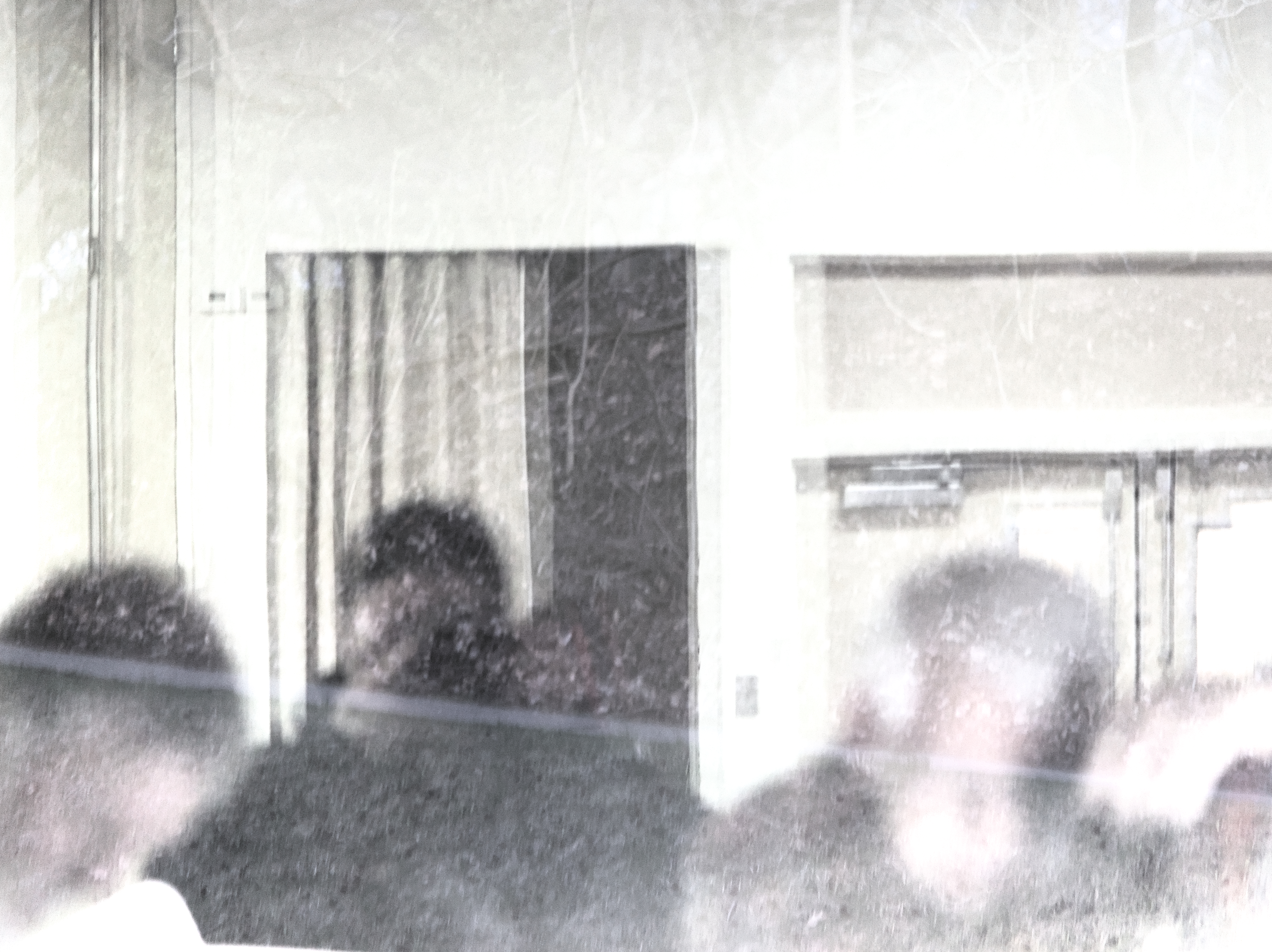
Setting the stage. In the middle of all of the things and everything in between, we met together for this moment of cyclical transformation in time. 30 plus people creating an experience and new memories, recording independent timeless moments or symbolic expressions and experimentations. We wrote with light, maybe something redeemable and intelligible or acceptable to ourselves and our clan, the following week upon group review may get shared, and just maybe persist longer as "art?" If it were 200,000 years ago and we were meeting in a cave lit by our communal fire. We'd write not with light but perhaps charcoal or spit out pigments of wet clay from a thin reed or hollow bone, maybe stenciled over our hands or any implement to draw animals and imaginary gods to tell stories together. Then this image would be something different, perhaps one of me spraying my own distorted palm on the wall right next to a drawing I made of a particular rock formation, to note where my clay came from, perhaps a nod to a symbol of where my ancestors hunted, lived and some constellation of that night's stars and planets to mark that moment in time as being significant to me. Meanwhile, my colleagues who were busy mixing the clay and determined in the shapes and colors they had chosen to represent the animals they were hoping to conjure in a symbolic ritual would bring forth a good harvest to survive for the next few weeks when spring would bring more plants, fruits and a greater pallette and subjects to depict on the next cave gathering's walls. Here's to a fruitful night, may nobody remain lost in the dark woods or cavern of their fears!
MASTER CLASS. Steven C. Morreale (2025)
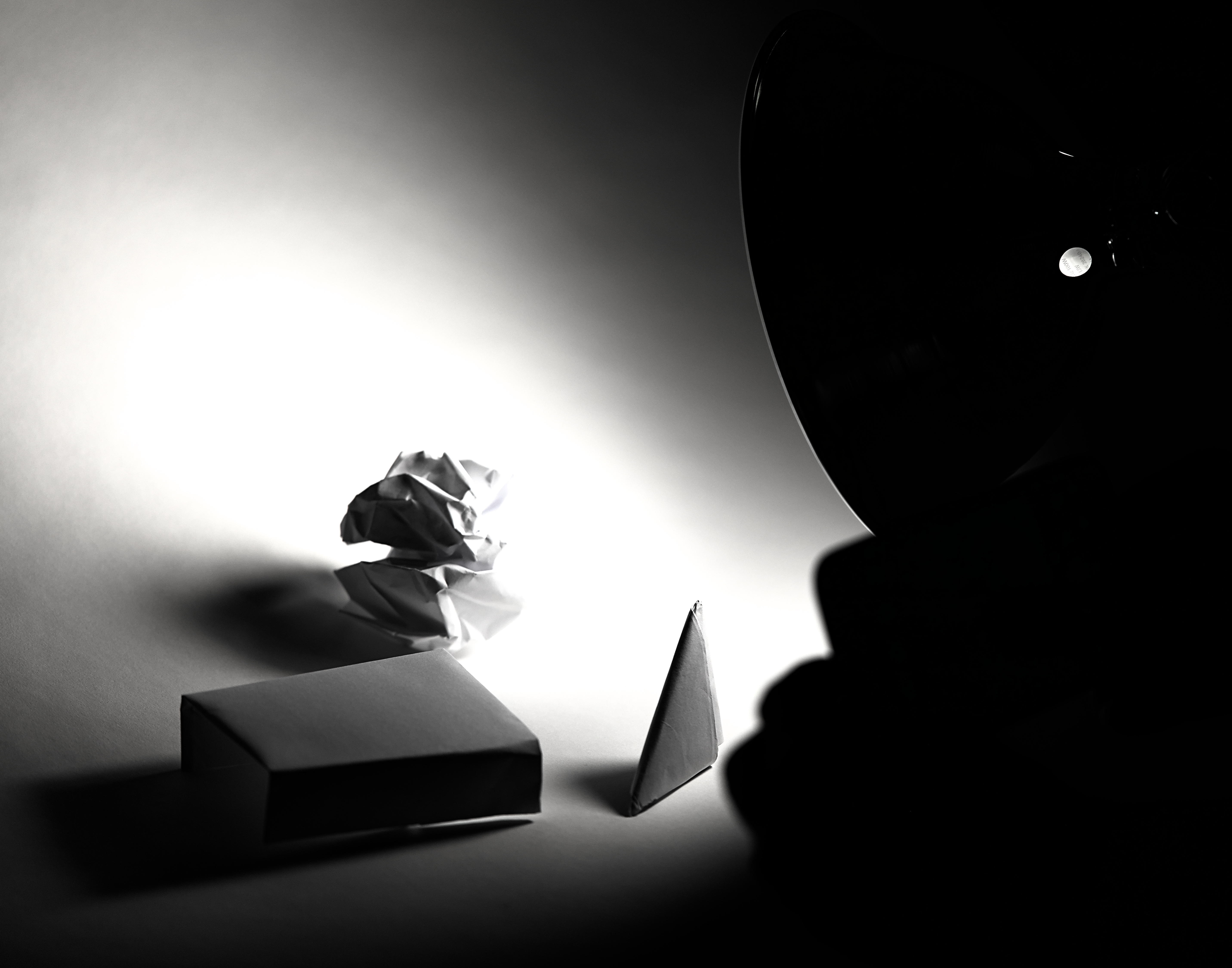
A fellow photographer capturing their creation with light. After I had focused on my own creation and made my captures, I walked around the room taking brief looks over the shoulders of some of the workshop participants. While processing my 41 images captured, I found that I had about roughly 25 arguably compelling compositions, some tell a story in my mind, others are stand alone abstracts images. Any could be wall art or computer desktop art. I think I will print some as I am in need of decorating some of my walls and I'd like them to be images that I captured and processed myself, in homage to my father's influence on me and the influence of many wonderful people who have enjoyed photography or sharing their life stories with me over the years.
OUT OF BOUNDS. Steven C. Morreale (2025)
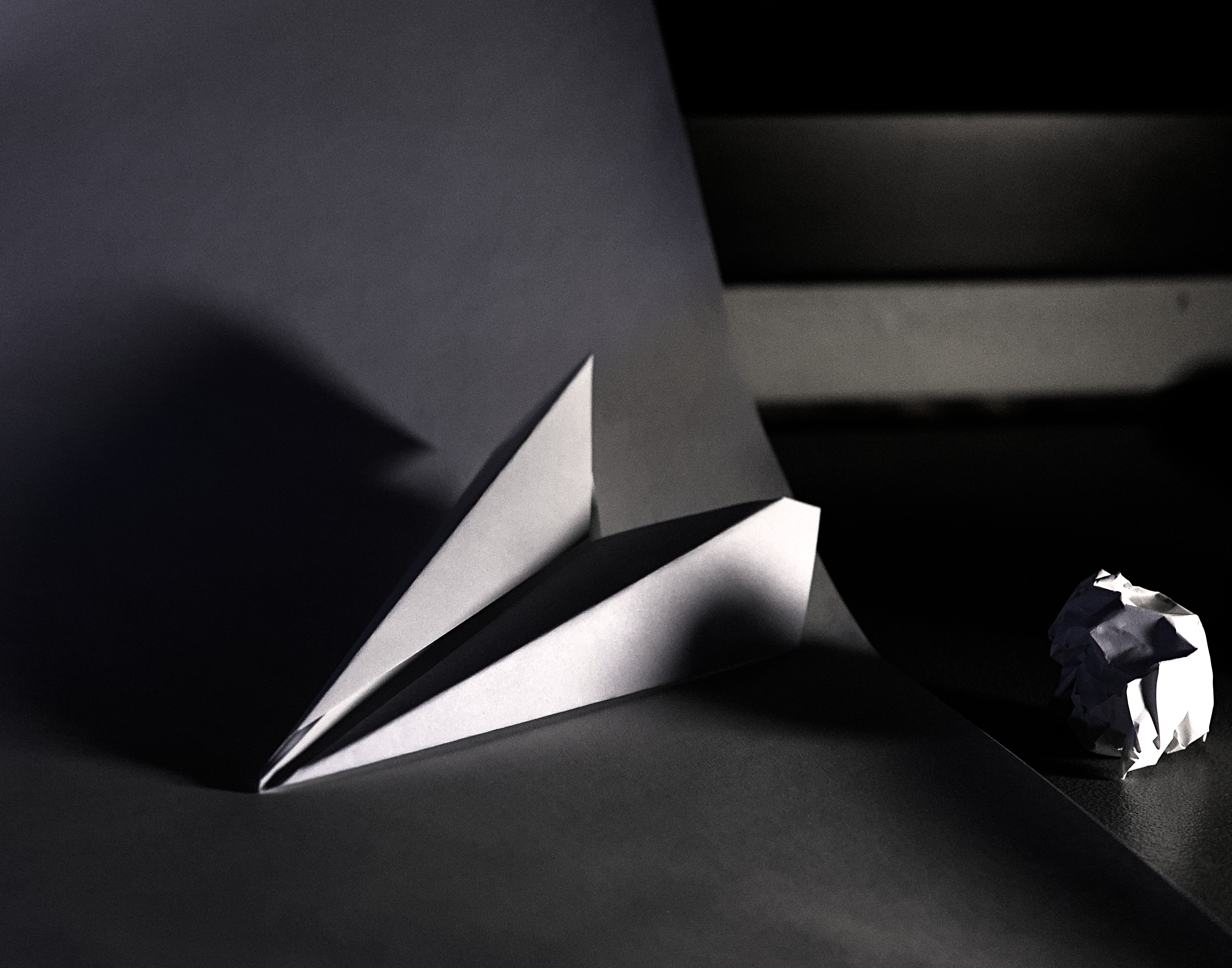
I think one of my table colleagues, Jay, chose to fold an airplane. After I walked around, I saw this juxtaposition of subjects, one clearly on the seamless backdrop, the other, a rolled up ball of paper. It reminded me of my Middle School years, when in 1986, the Peters Township School District had to send us to a building that was in another district, the Neil Armstrong Middle School in Bethel Park. Back then I wanted to become an astronaut, and that year was also when the space shuttle Challenger mishap happened. In that school, it was an open concept design, walls didn't reach the ceilings, you could see across classrooms from one part of the building's classrooms to another and even over the locker areas. Back then I imagined someone daring enough perhaps during their study hall, or when bored in English class, which was perched in the open above the lockers, someone throwing a paper airplane or a ball of paper and it reaching all the way to one of the other classrooms. From English class I could turn around and see directly into my social studies teacher's classroom at the far corner of the building. That social studies classroom was the place where I remember first hearing from Mrs. Coon about that shuttle tragedy and I first thought, that's a terrible joke to say! Then we watched it on the news cast there, a big tube television that had been rolled in on a tall cart. The crumpled ball, is crashed out of bounds of the paper, the shiny table surface while the airplane looks undamaged and could perhaps have made my imagined flight. Off to the right, the lines remind me of horizions, sea, air, sky, space... even beyond? This image mixes up the rules and boundaries of the assignment, the brightest parts, and the darkest parts, in the middle grey... all possibilities but even they are not limited by the suggested boundaries.
PIECES. Steven C. Morreale (2025)
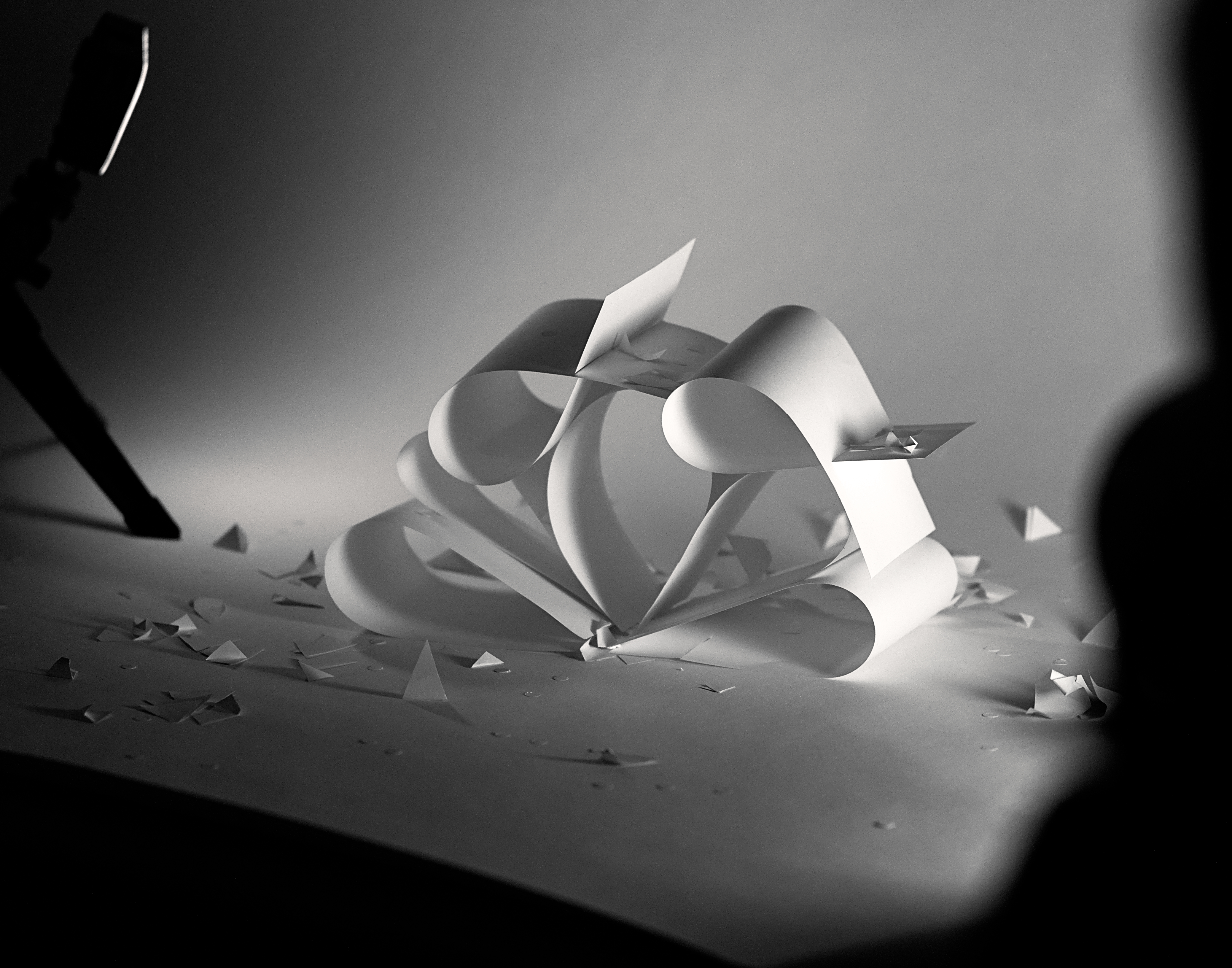
With my continued journey around the room, after my own experiments with paper and the assignment's boundaries, I captured this creation and set-up over the shoulders of some of the member participants. We were free to add additional lights. I like the controlled chaos of this concept. It evokes in me a feeling of something happening, either being built or disintegrating. The sharp lines of the cuttings, combined with the smooth curves, combined with the variety of soft and hard shadows. It balances putting me on edge with my mind trying to figure out what is happening and putting me at ease, the structure seems surprisingly... stable, for the moment amidst the chaos of going to pieces. The fan-like shape has an organic vibe for me, like something growing and blooming out, a transformative imagery. It is unfortunate that I won't be able to attend the following week's review of image submissions to hear what others think and the creator's idea. Maybe they were just experimenting to see what they could discover. Great fun!
TAKE SHELTER. Steven C. Morreale (2025)
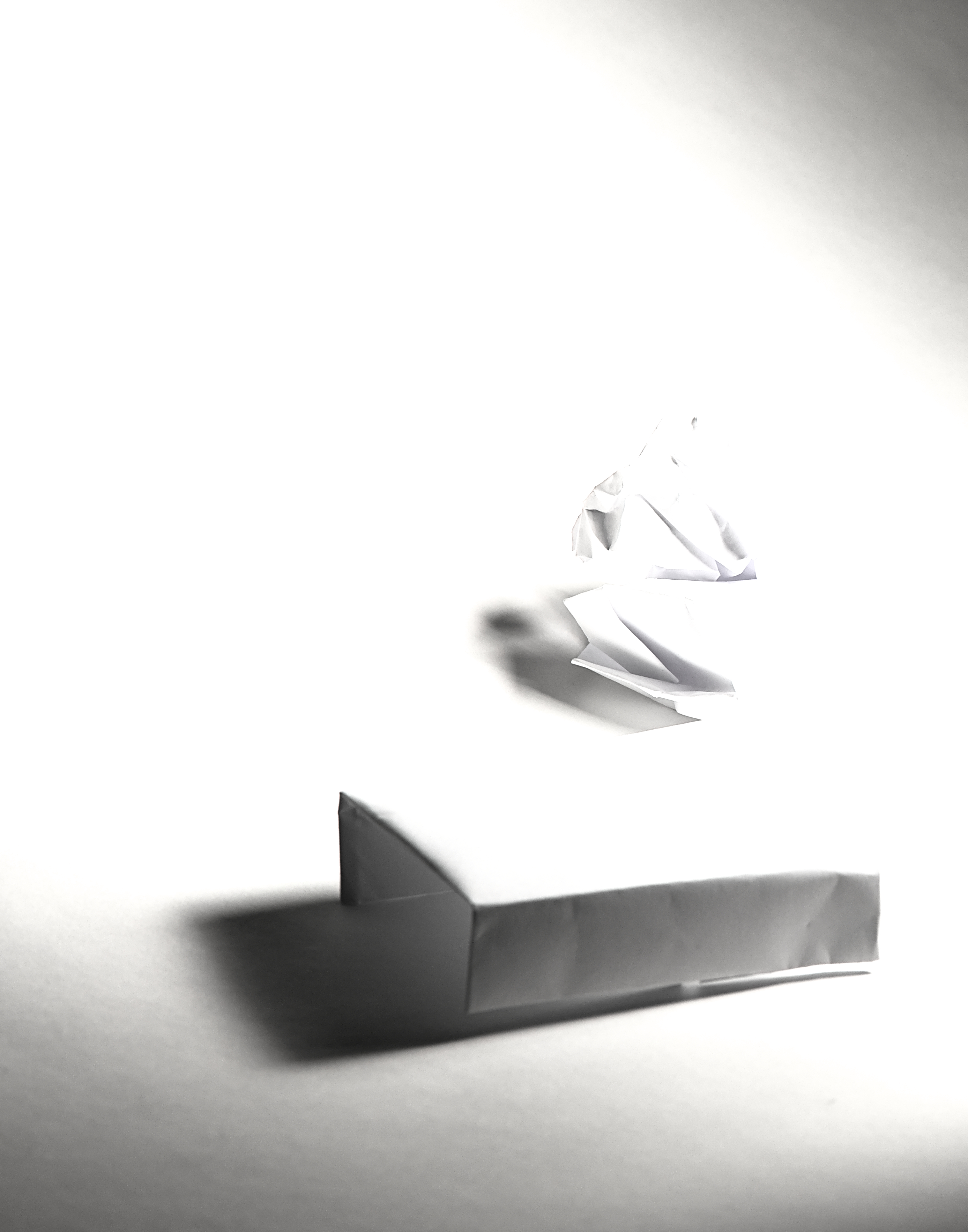
Finding what other participants created with the paper provided, gave me an opportunity to make my own captures with whatever they left around or permitted me to borrow. My goal here was to make the paper disappear with the light and see what the result would bring. Such abstract art is relatively new to me. I decided to keep this image among my more final 25 of the 41 captures I made at the workshop. The shapes and my title give a suggestion to the viewer to perhaps see something. One can put whatever they want into interpreting the image. I saw danger, exposure and shelter, and perhaps a fragile shelter. I think I could delete this image as much as save it... I don't see much redeeming about it for me, I wouldn't hang it on my wall, nor would I use it as a computer screen saver. Maybe I could use those two criterion in deciding to scrap an image or not. But with that said, in the right setting... this image could work, as a photograph printed and hung on a wall. Probably at a huge corporate bank, so if that's the case, it is definitely priceless art.
PROMINENT. Steven C. Morreale (2025)
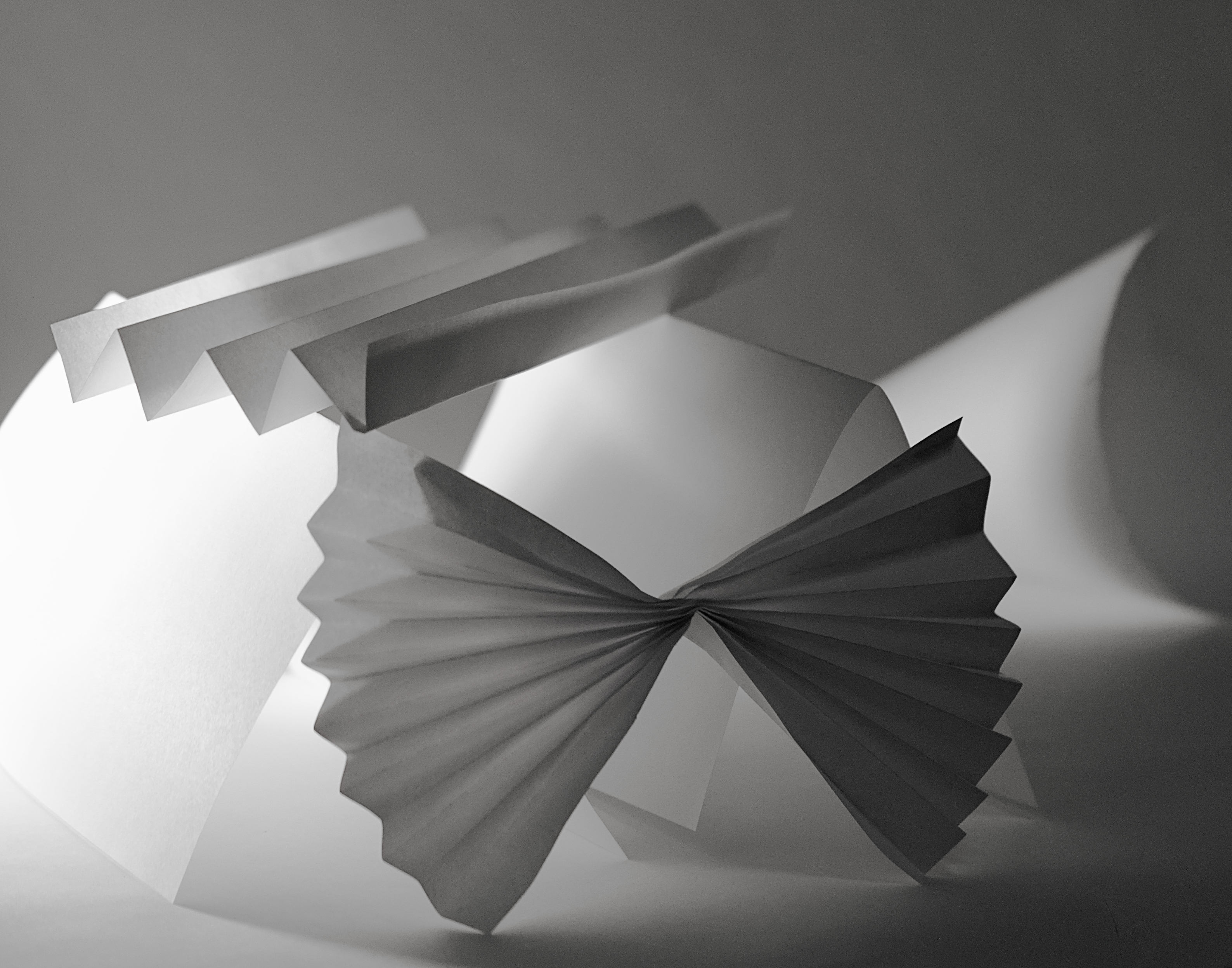
Another construction by participants in the workshop. I saw this and had to capture it, because right now, my youngest niece's prom is fast approaching. Maybe that is why I saw a prominent bow-tie. I could potentially see me printing this to hang on my wall as artwork, but we'll have to see how prom night goes first.
LOIGHT. Steven C. Morreale (2025)
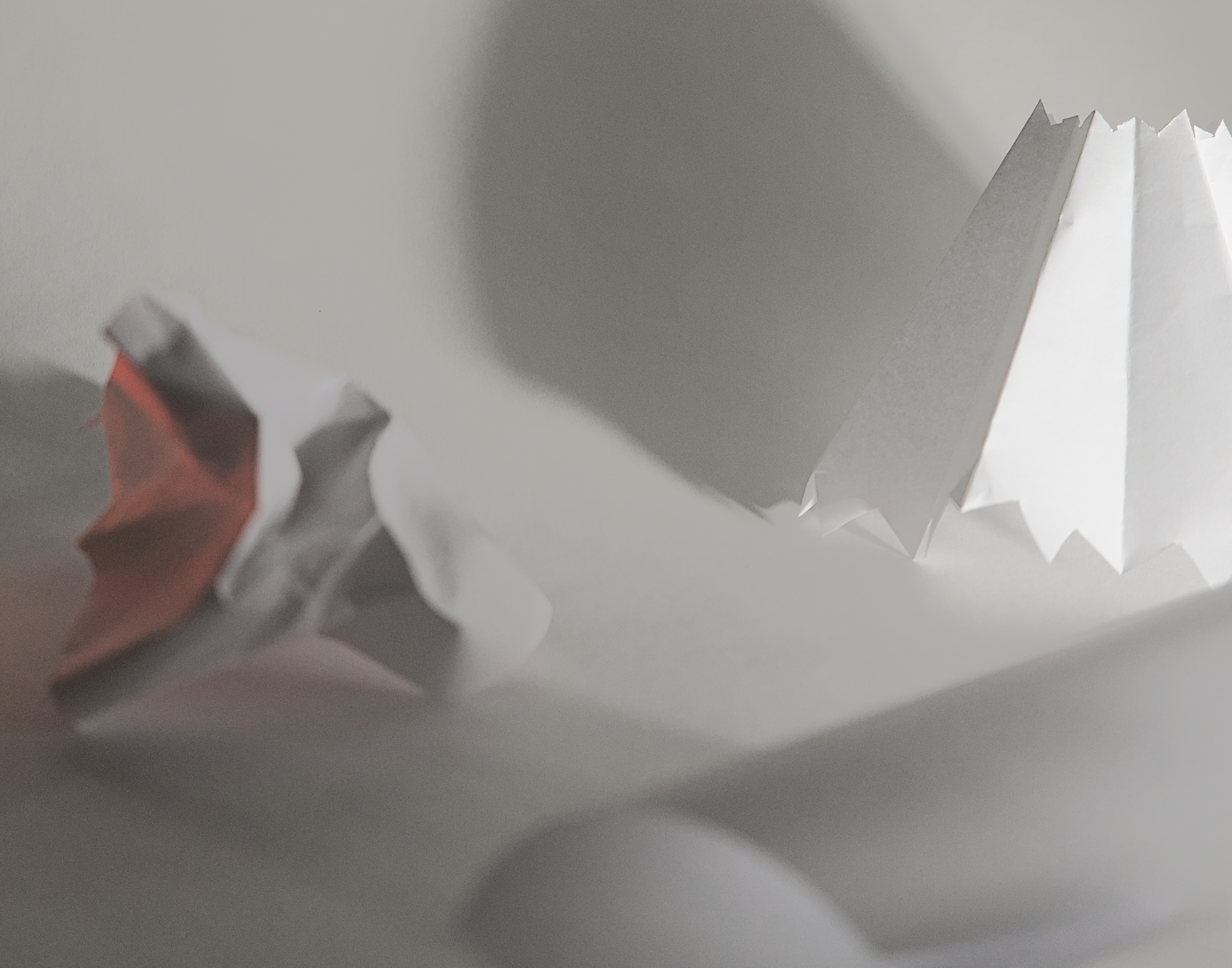
Abstract art. This collection of shapes was captured and I went with muted color and brighter exposure. I was reminded of construction, art class, or school with a shape resembling to me pencil sharpening debris, another with a shape that appeared to me as the non-stick surface behind a used adhesive name tag label, and another shape with some color a crumpled up discarded note or gum wrapper.
ABSOLUTE ABSTRACTION. Steven C. Morreale (2025)
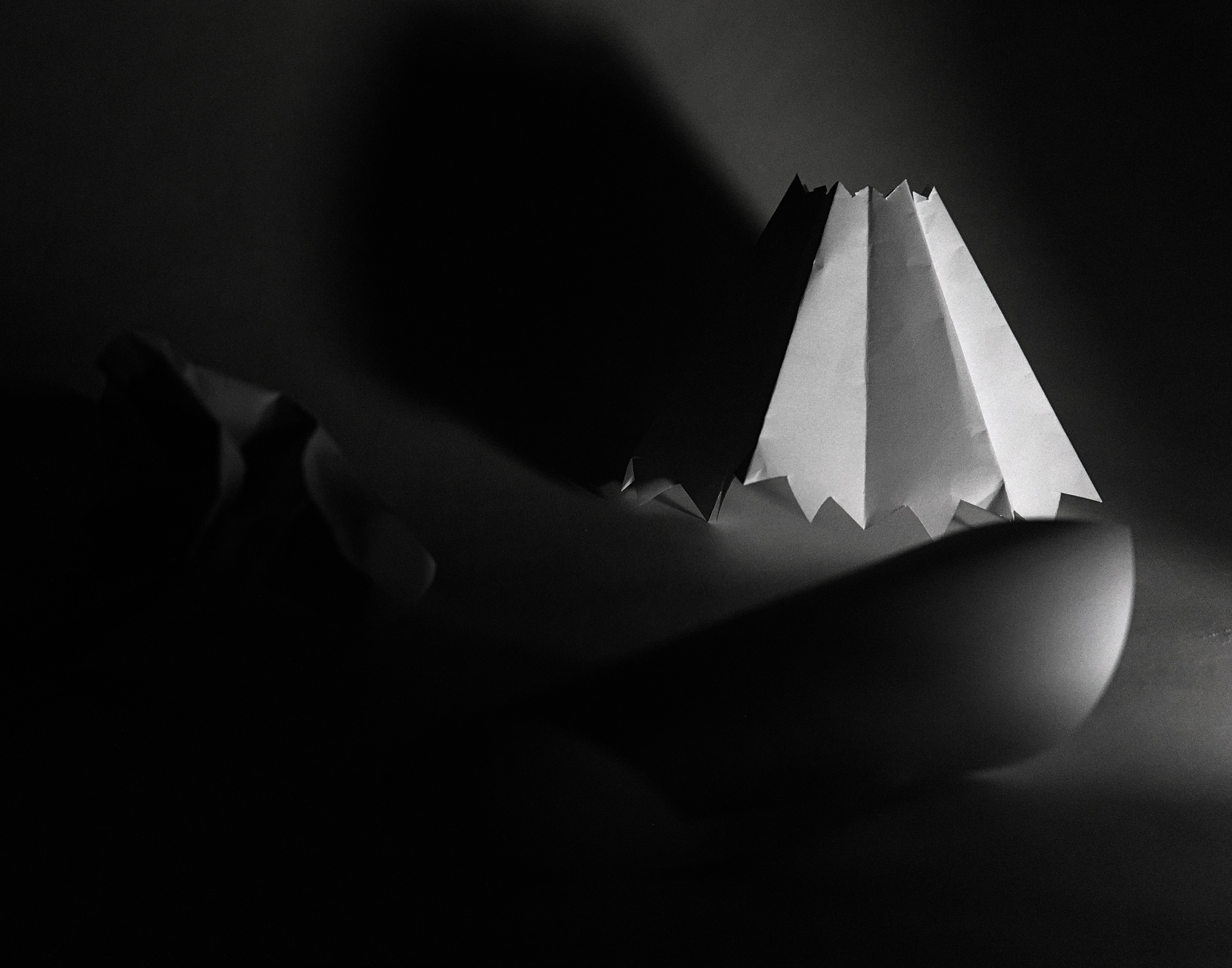
A different view of the collection of shapes used in LOIGHT. This abstraction felt more extreme with stronger black and white dynamics. I was reminded of the formation of a plan, a drawing or chalk board.
CALVARIUM (SERIES) 1: PERFECTED EXECUTION. Steven C. Morreale (2025)
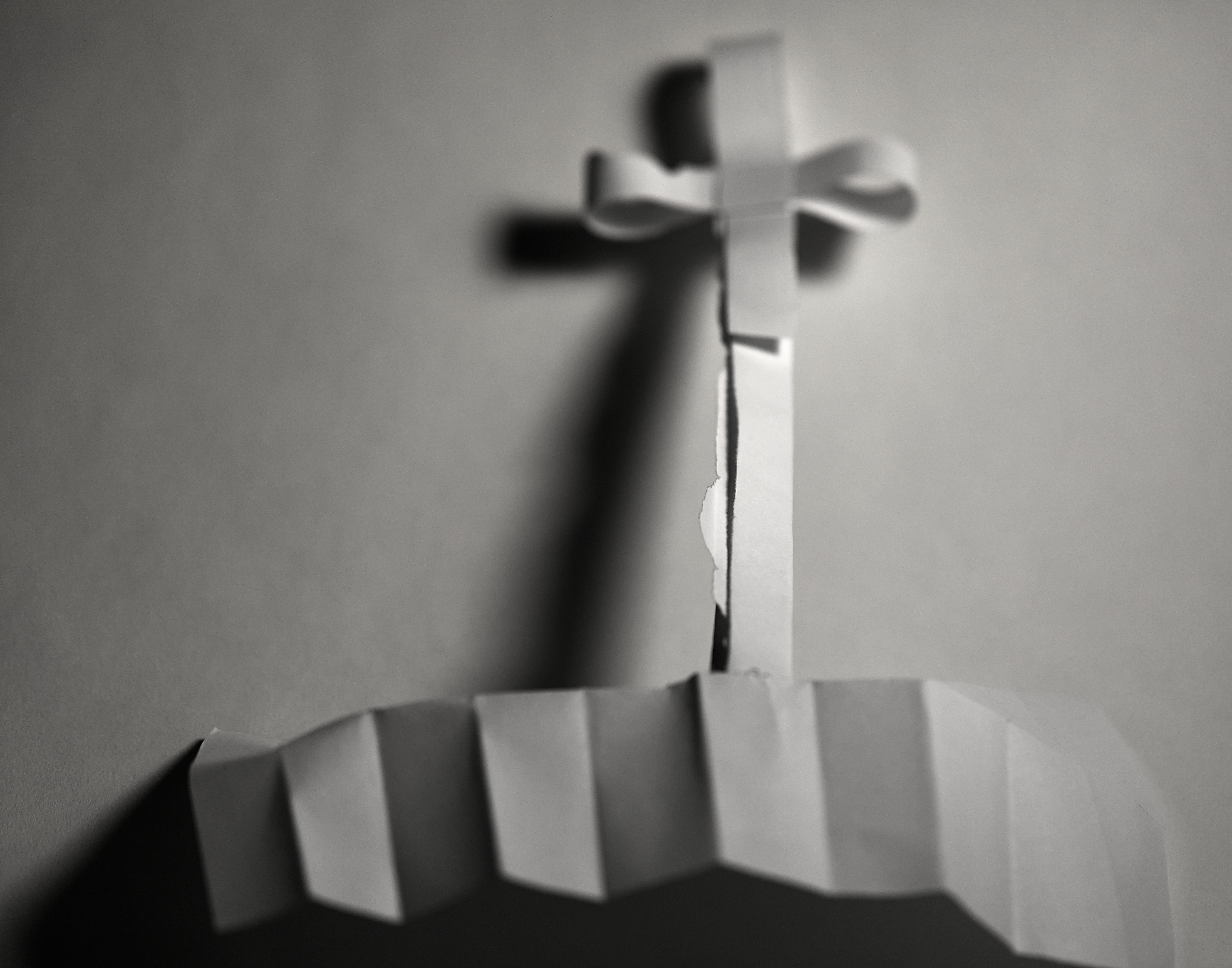
My workstation initial attempt at executing an idea. TRIAL AND ERROR! As I prepared the paper for making my cross in the similar manner as how I would fold a palm frond into a cross, I remembered that the palm fronds, like every human being are not perfect. So I made my creases light and tore imperfectly by intention. The image lost focus as my macro lens focal plane wasn't right, but I chose not to discard that image, it was the first attempt and I was going for symbolism at a meta-level by design. So I was willing to let accidents and errors happen and retain them for later interpretation and possible usage. I wouldn't keep this image, but it starts a story and reminds me of an experience with my grandfather 40 years ago and other experiences that are deeply personal and meaningful to me.
CALVARIUM (SERIES) 2: ASIDE. Steven C. Morreale (2025)
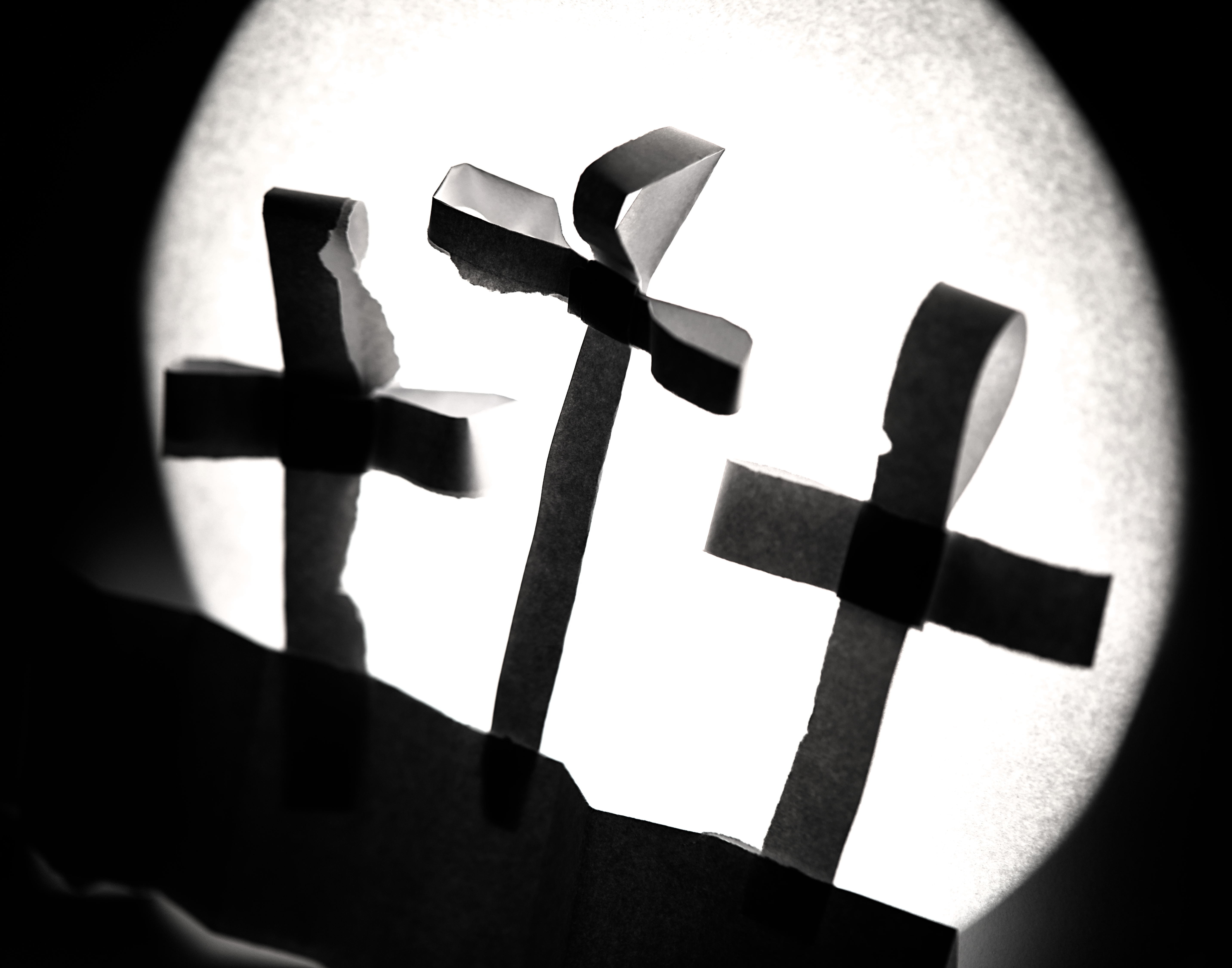
I chose to modify the light source with one of the pieces of white paper. My conceptual idea was the cross, actually three crosses at the moment of the crucifixion of Jesus Christ. The setting of that event is a location called "Calvary" which comes from the Latin Calvaria which translates to "skull," and "Golgotha" (comes from the Aramaic Gûlgaltâ, also meaning "skull." According to the New Testament (Matthew 27:33, Mark 15:22, Luke 23:33, John 19:17). Golgotha, or the "Place of the Skull," is the site outside Jerusalem where Jesus was crucified. The symbolic connection to the skull has layered symbolism in the context of the Crucifixion in Christian tradition. It represents death and mortality, as Golgotha was a place of execution, but it also carries deeper theological meaning. Some traditions hold that Golgotha was teh burial place of Adam's skull, and Christ's Crucifixion on this site symbolizes the redemption of humanity from the original sin of Adam. The skull at the foot of the Cross in Christian iconography often represents this connection, with Christ's blood symbolically washing over Adam's skull to signify the cleansing of sin. The aname of the site may derive from the hill's phyiscal resemblance to a skull, or it could be a symbolic reference to a place of death, as skulls are often associated with mortality. In a meta-sense I titled this series Calvaria, because as some view eyes to be windows into the soul, the perception of light onto the back of the eye's retina is transformed into electrical impulses carried and interpreted within the brain. The Calvaria covers and protect the mind, in our senses and mind we interpret images, light, dark, shapes and our metaphorical camera obscura of the mind's eye we see the world and overlay significance and meaning. The Crucifix, particularly three side by side, tell a story of perfection, imprefection, sin, repentence and salvation, light and darkness. With the extremes of contrast in the lighting, I wanted to point toward the infinite and absolutes in more than mere paper and shapes can convey. It is near Palm Sunday and Holy Week, a time for remembrance of such things, introspection, reflection, repentance and salvation. The transformation happens in one's mind, body and soul, and different perspectives and actions are made as a result. I my resulting interpretations of my image captures, I wanted each to tell parts of such a journey and story, so I coupled them all together as the Calvarium Series, an imperfect human conveying imperfectly the perfect execution of rebuke, repentance, and transformative salvation by an execution and a subsequent resurrection.
CALVARIUM (SERIES) 3: TWO OR MORE. Steven C. Morreale (2025)
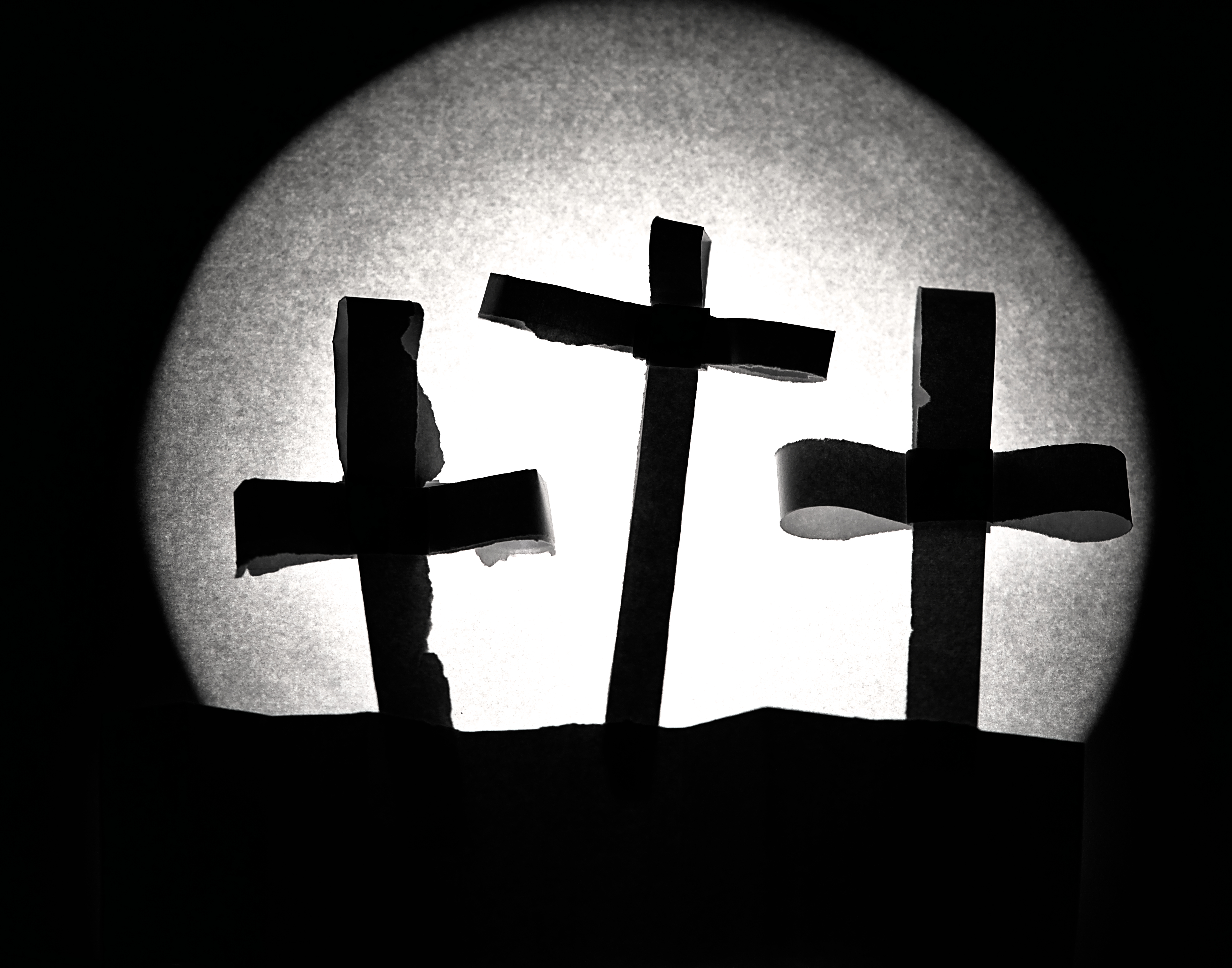
This image is the one I conceived in my mind at the outset of the assignment after being given our simple materials. The title, TWO OR MORE, is a reference to Matthew Chapter 18 superimposed upon the imagery from the Gospel account written by the physician named Luke 23:39-43. I also knew that I needed two or more pieces of paper to wrap together to form the cross, and that I should follow the rule of threes for photography and that it aligned with the actual Gospel that Jesus was on a cross with two thieves beside him.
CALVARIUM (SERIES) 4: REBUKED. Steven C. Morreale (2025)
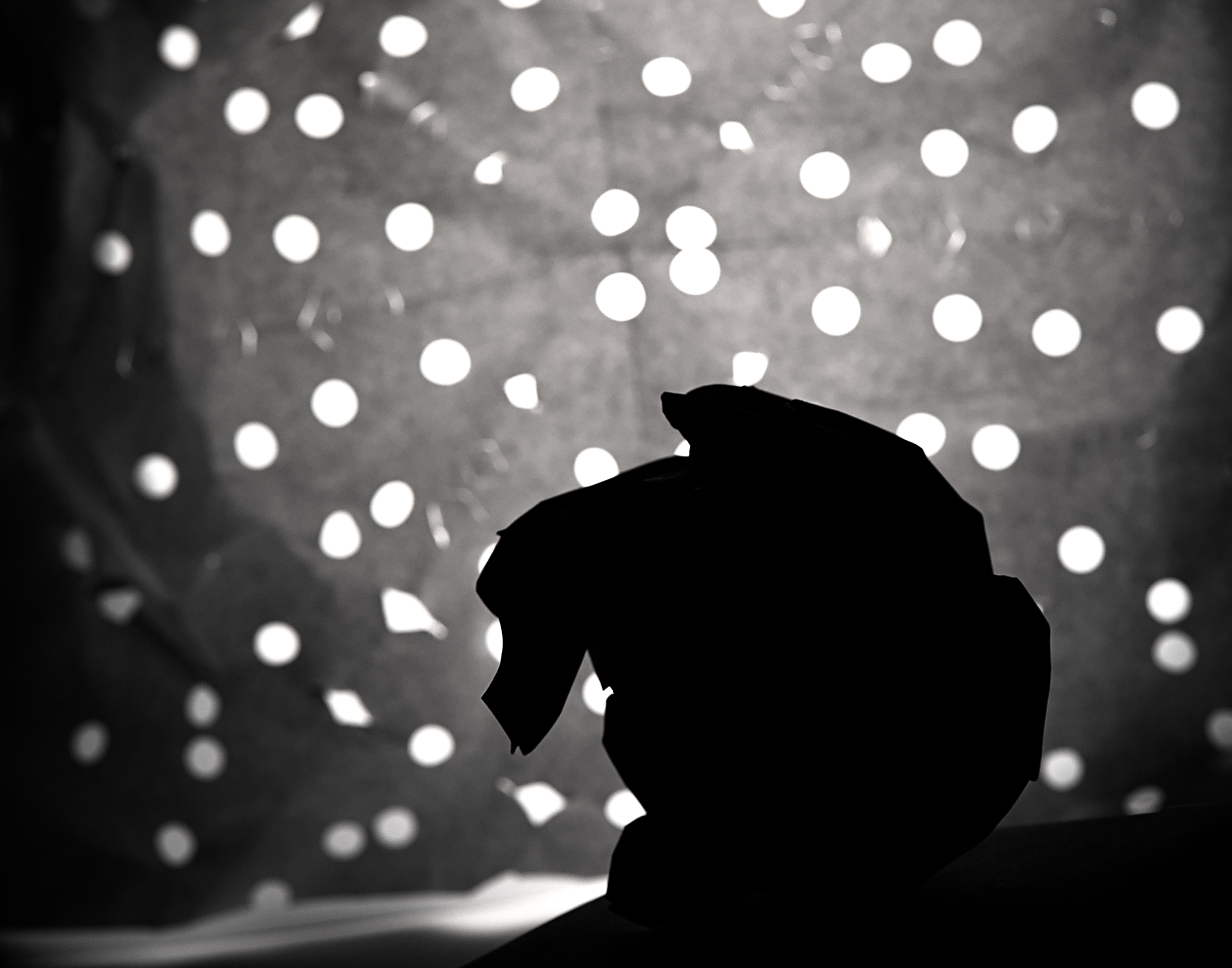
The silhouette is literally a ball of paper crumpled, and it is sitting upon paper that was folded into the structure seen in my earlier image TAKE SHELTER. The background is a piece of paper that other participants created as a light modifier by folding and punching and cutting holes in it. As I processed the image, I noticed that the sources of bright light resemble stars emanating out, and due to the creases in the paper, there is a cruciform shape in the background above the foreground silhouette. I find the shape of the foreground to have a gargoyle like appearance, or a winged entity bent over, looking down, humbled or crouched. So for my purposes in the Calvarium series, it is deeply symbolic, a fallen angel of light, Lucifer, or Satan. The veil of paper and it's fibers transluminating the scene as points of light are emanating and ascending and descending in the background. The image is also tilted to the left as if everything is falling away to the left or being lifted up to the right.
CALVARIUM (SERIES) 5: BLESSED. Steven C. Morreale (2025)
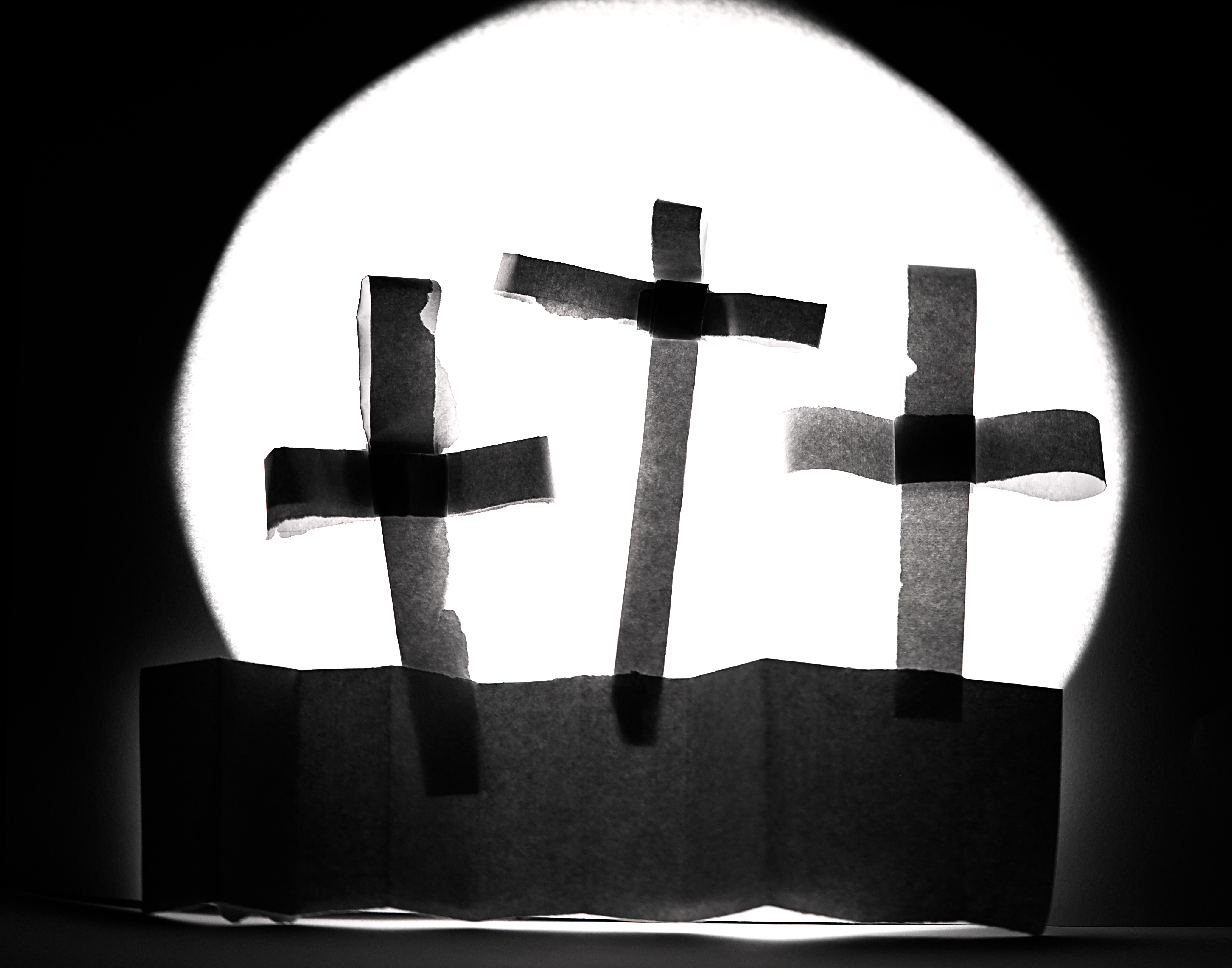
The brighter backlighting, and the imperfections of the crosses, give a sense of movement, the central cross seems to have the right side outstretched and elevated, the lighting transluminates the base of what represents the ground of Golgotha, and the bottom of the image even shows light reaching underneath. The lighting can not be a Moon, a Sunrise, nor a Sunset, it penetrates the ground and beyond intentionally in this processed image. This follows the earlier reference passages and traditions, meanings behind the name of the image, the shapes, and the lighting that it conveys.
CALVARIUM (SERIES) 6: SALVATION PARADISE. Steven C. Morreale (2025)
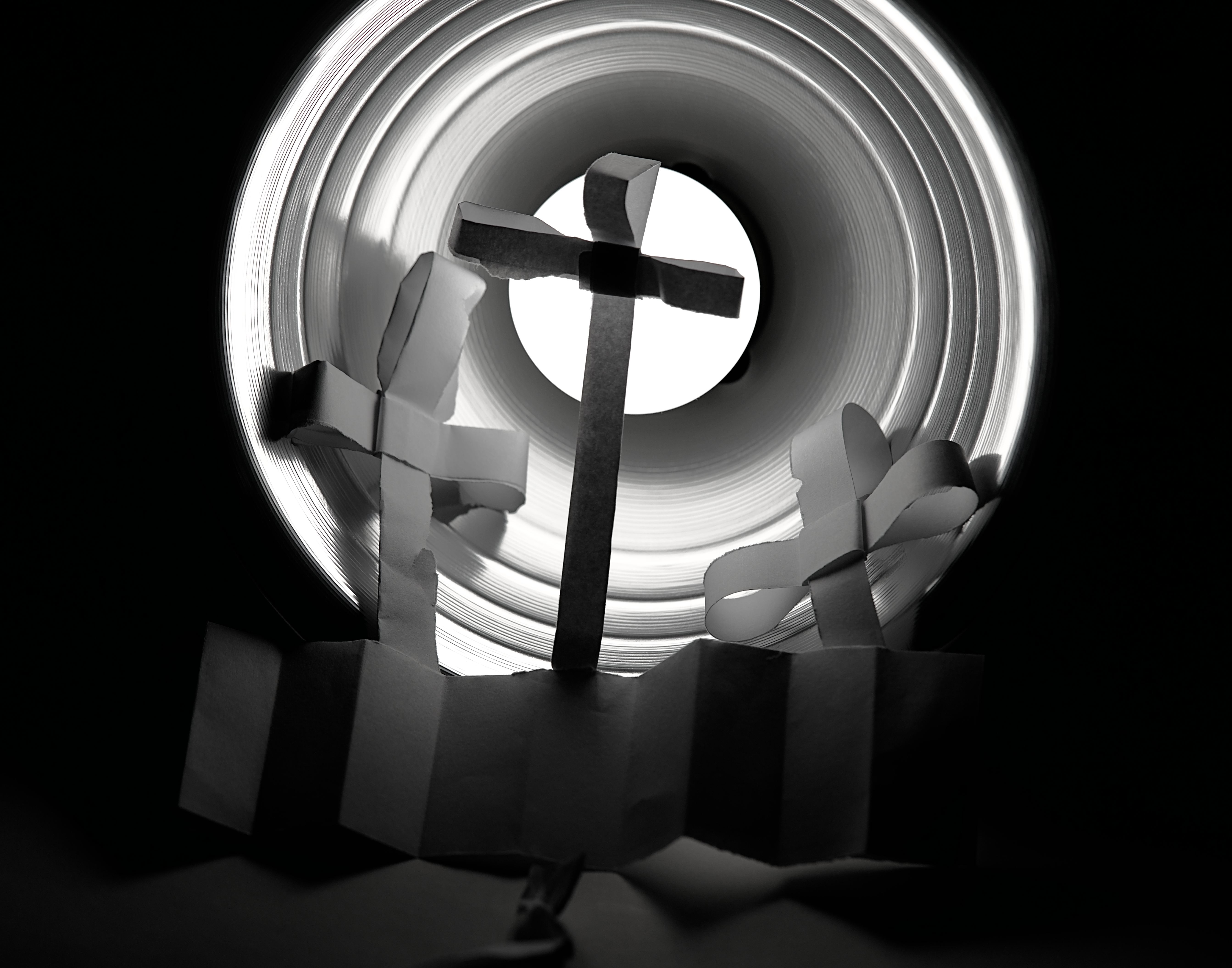
Luke 23:39-43
39 Then one of the criminals who were hanged blasphemed Him, saying, “If You are the Christ, save Yourself and us.” 40 But the other, answering, rebuked him, saying, “Do you not even fear God, seeing you are under the same condemnation? 41 And we indeed justly, for we receive the due reward of our deeds; but this Man has done nothing wrong.” 42 Then he said to Jesus, “Lord, remember me when You come into Your kingdom.” 43 And Jesus said to him, “Assuredly, I say to you, today you will be with Me in Paradise.”
The bare bulb and silver reflector gave an effect as though a portal was behind the paper crosses. Again the cross in the middle is taller and appears to have the right side outstretched and the form is above the cross laying underneath it, symbolic of the criminal promised Paradise. There's a form that has a serpentine appearance at the bottom center of the image, and the shadow cast across the lower folded ribbon of paper also has a serpentine element to it. The effect is interesting, but my favorite images from this series are #3 and #4, I simply wanted to share my captures as they can be turned into a narrative when combined together which was interesting to me. I created 4 more images that are more abstract and kept them with this series. One or two could be stand alone and interpreted differently.
CALVARIUM (SERIES) 7: TWISTED NAIL. Steven C. Morreale (2025)
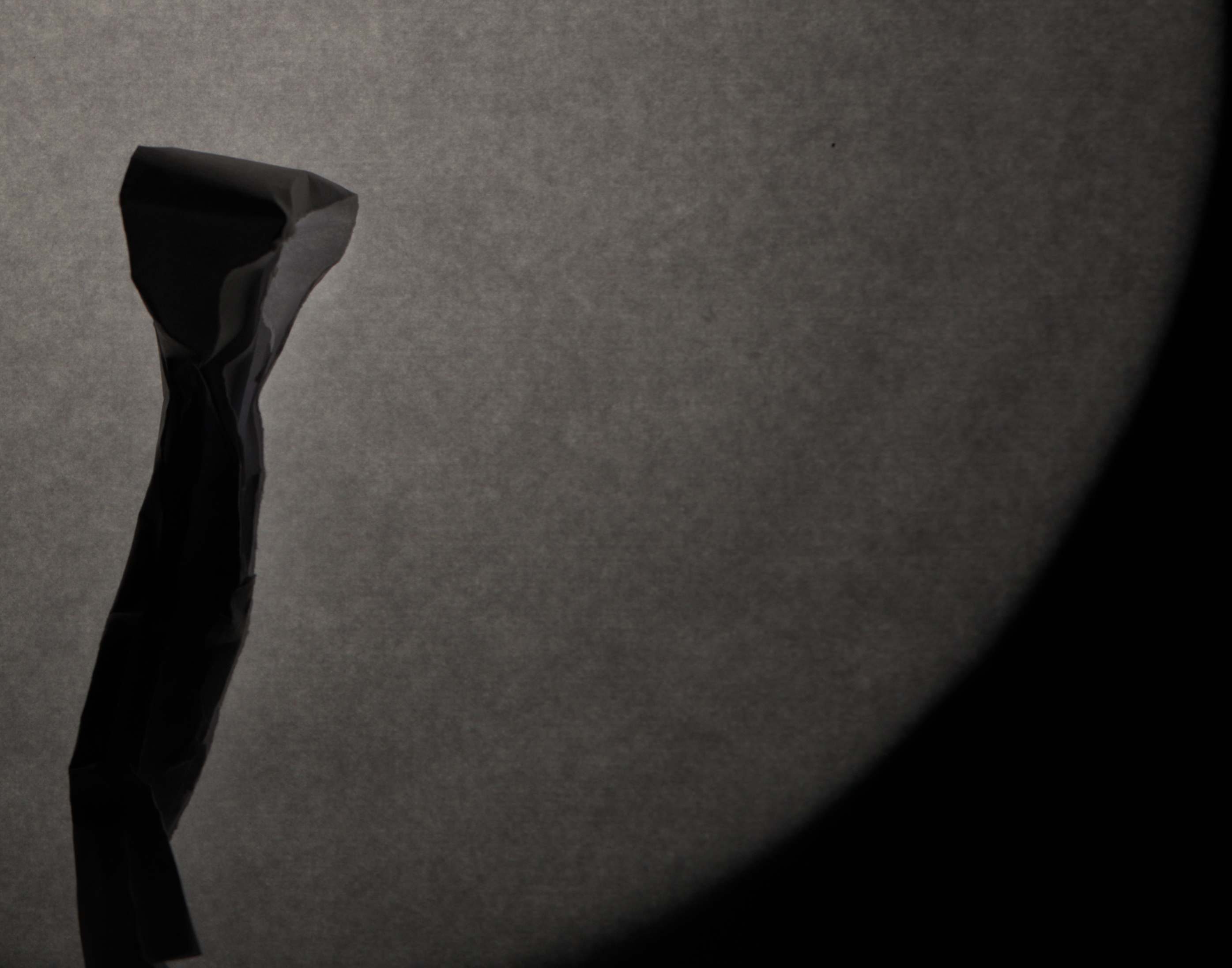
Is it a nail or a twisted person in a hoodie? Maybe just paper twisted in light.
CALVARIUM (SERIES) 8: TWISTED PERCEPTION. Steven C. Morreale (2025)
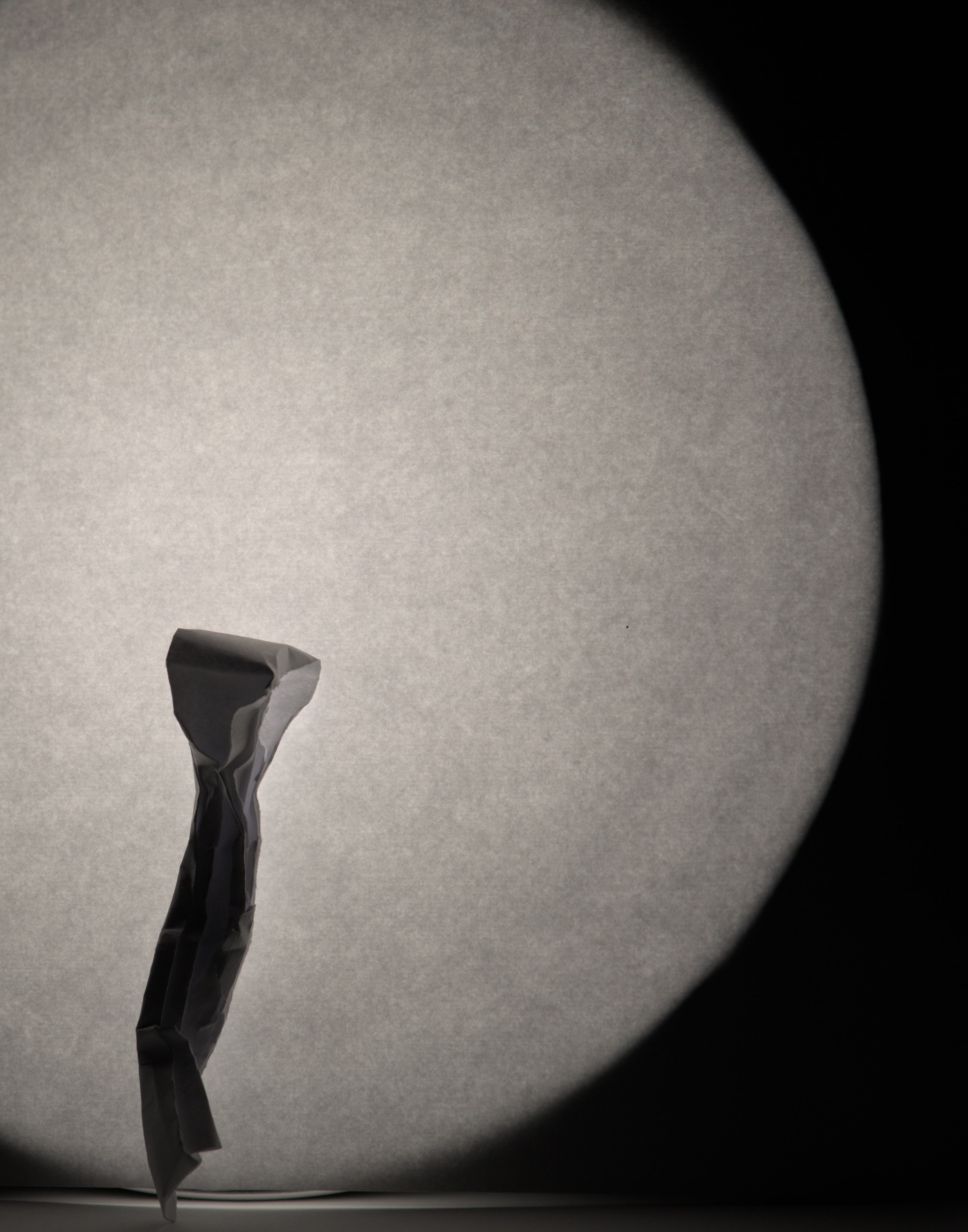
I wanted to keep this image and felt it had a more enclosed feeling, the twisted paper in the spotlight, resembling a hoodie, to the right there isn't just an incline of darkness, but it seems to come up and enclose the subject. It's a matter of perception, we can twist it anyway we desire.
CALVARIUM (SERIES) 9: UNTWISTED ENLIGHTENED OPTIMISM. Steven C. Morreale (2025)
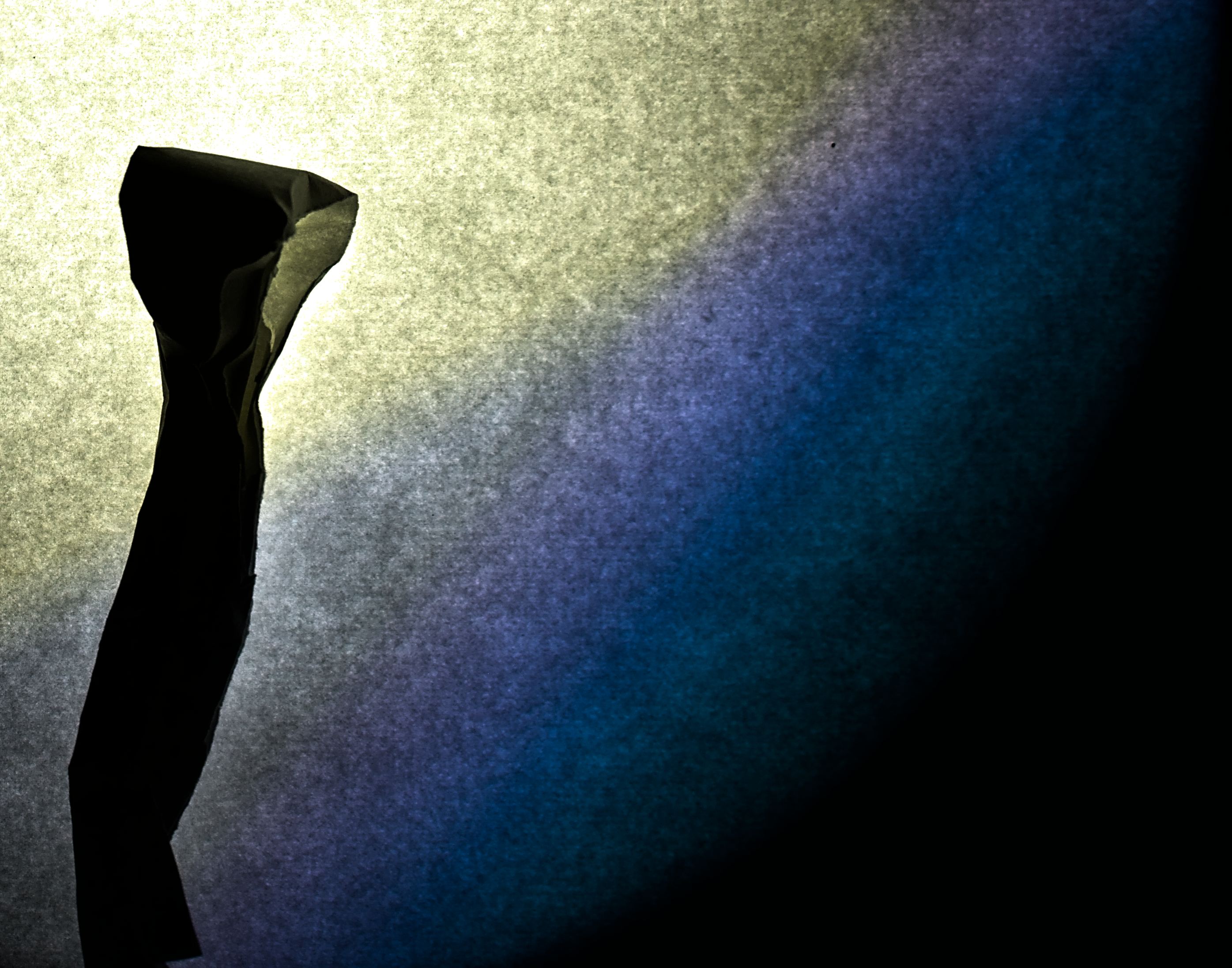
I introduced some color to this one in post-processing to express a change happening. I noticed the color made the inside of what I see as a hooded form glow, and that I was able to get a coloration to make the dark right side of the image less stark and ominous. So enlightened, literally and figuratively, I found the image to convey more optimism and hope for this twisted paper soul. Also by darkening the paper form, the twists mostly disappeared, leaving only the suggestion of folds on the hoodie portion. The way the edge of the bright portion of the hoodie manifested, it invites my eye to explore the area to see if I can discern a face or an an expression, maybe a nose. Again, the suggestions are there intentionally, but a viewer can project onto the imagery whatever they bring to the composition from within their own mind. I'm pointing towards a suggestion from within my mind with my choice for the title.
CALVARIUM (SERIES) 10: UNTWISTED STERN RESOLVE. Steven C. Morreale (2025)
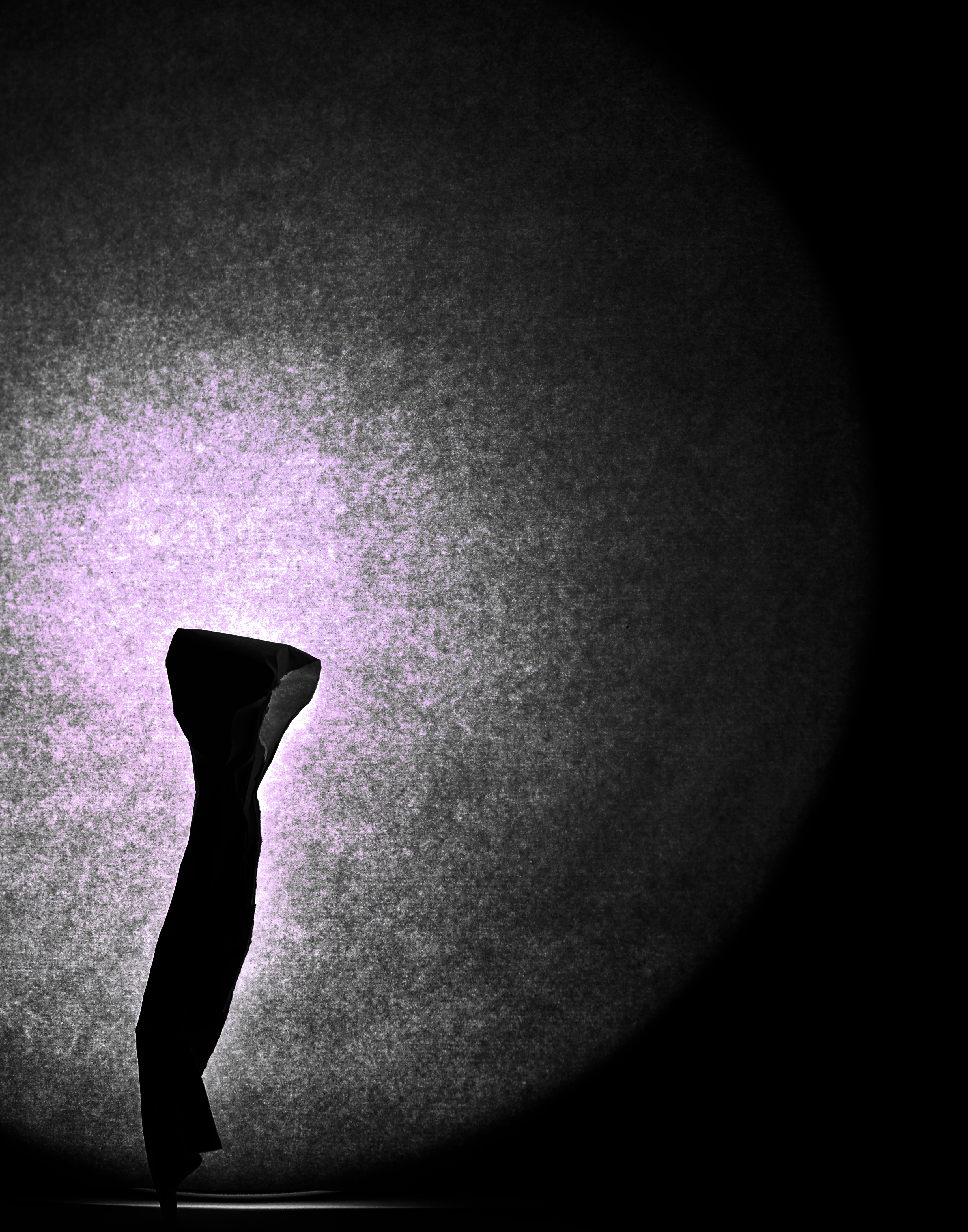
One of my favorite quotes: "Obstacles cannot crush me. Every obstacle will yield to stern resolve. He who fixes himself to a star does not change his mind" -Leonardo Da Vinci (c. 1500 Notebook) Again the form has lost the twist by the darker exposure and processing. The suggestion of a spotlight at the bottom, the upper portion resembles a hoodie with light emanating from where a face would be. A halo effect of purple seems to emanate from the form, suggesting the illumination of the dark barrier around it. Fixed to their star, they cannot be crushed, the darkness will yield.
CRINKLED AHHRRGHT: SONNET TO OZYMANDIAS. Steven C. Morreale (2025)
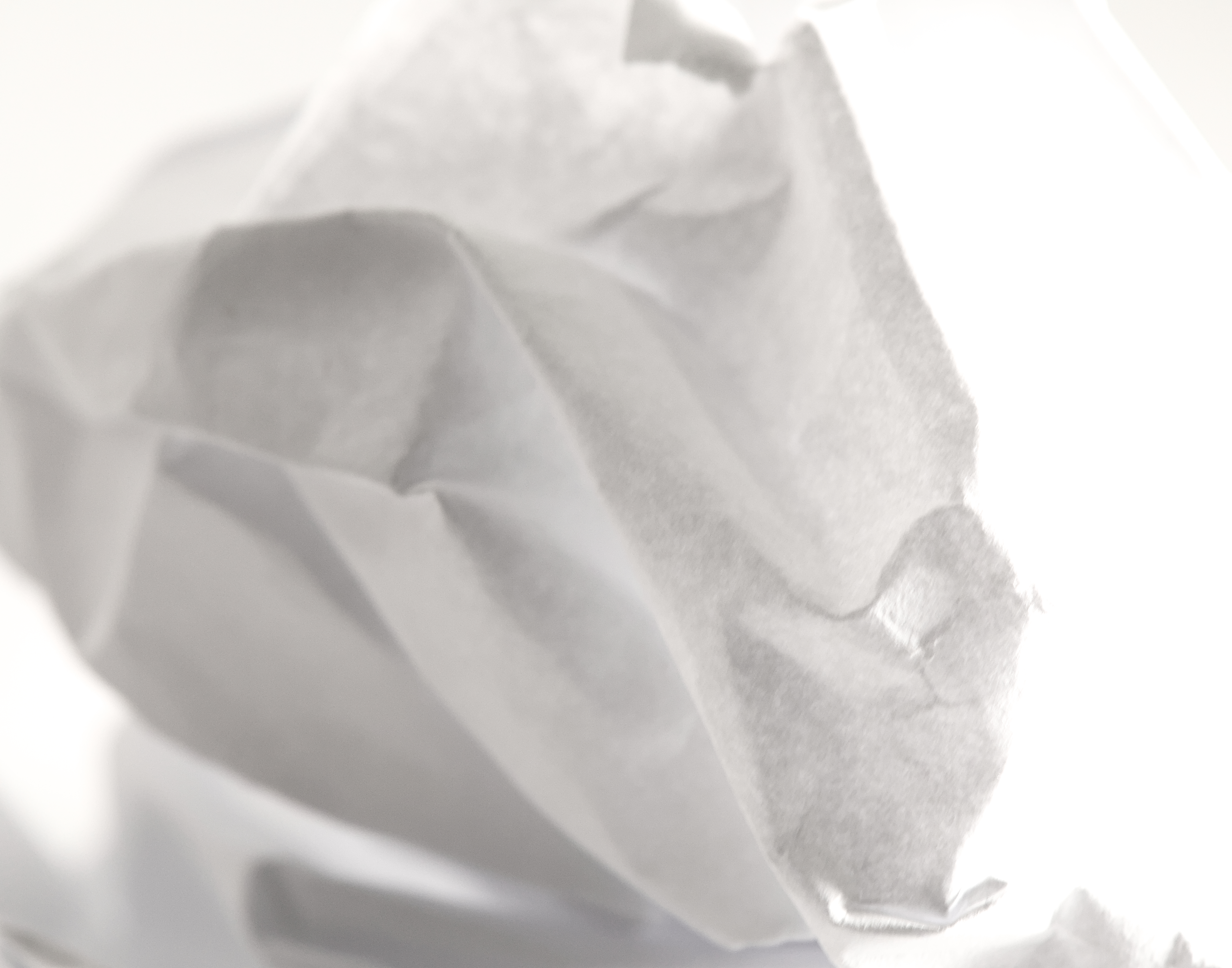
Ozymandias Pharaoh Rameses II (reigned 1279-1213 BCE). According to the OED, the statue was once 57 feet tall.
Ozymandias By Percy Bysshe Shelley I met a traveller from an antique land, Who said—“Two vast and trunkless legs of stone Stand in the desert. . . . Near them, on the sand, Half sunk a shattered visage lies, whose frown, And wrinkled lip, and sneer of cold command, Tell that its sculptor well those passions read Which yet survive, stamped on these lifeless things, The hand that mocked them, and the heart that fed; And on the pedestal, these words appear: My name is Ozymandias, King of Kings; Look on my Works, ye Mighty, and despair! Nothing beside remains. Round the decay Of that colossal Wreck, boundless and bare The lone and level sands stretch far away." Source: Shelley’s Poetry and Prose (1977)This form suggested to me shapes resembling a Pharaoh's visage. A shape and shadow that looks to be an eye and a nose, but a mouth that is superiorly bifricated centrally just below the diagonal inferior portion of what would be the nose. This cold grey form, reminded me of the colossal Wreck from an antique land so well written by Shelley. The fall of a pinnacle of human hubris to the lone and leveling sands of time.
HOUND OF WAR. Steven C. Morreale (2025)
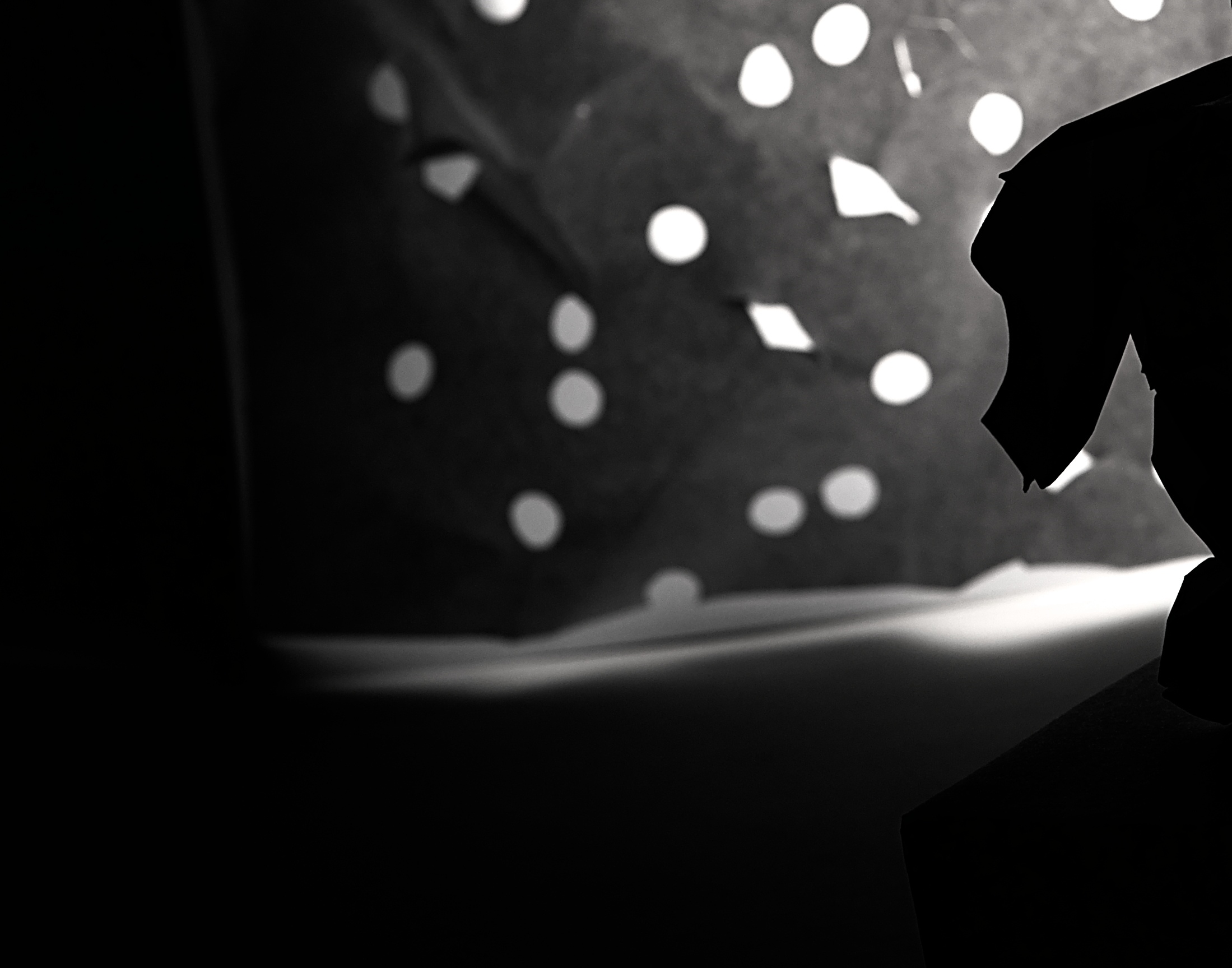
A different crop, of another image conveys a new perspective and title. The form on the right in dark as a foreground to the backdrop. Is it crouching in hiding or possibly in preparation. It resembled to me holes in a tent, the darkness and horse-like shape or dog like shape of what could be a head of a creature hounding gave me a sinister vibe.
CRINKLED AHHRRGHT: FANTASMY. Steven C. Morreale (2025)
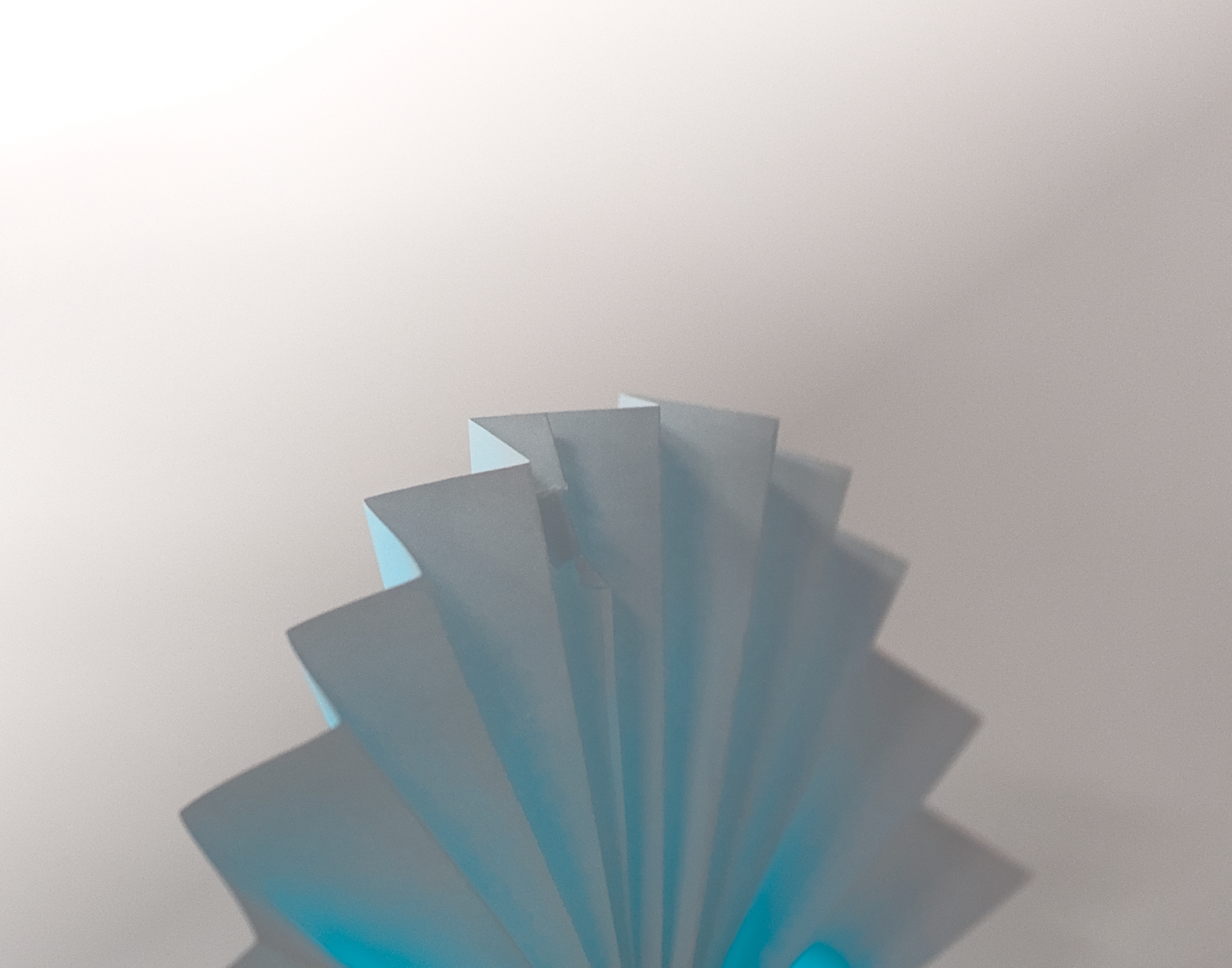
Abstract fantasy image. I could imagine this being a computer desktop background, or hung as a modern art print on a wall. The way the blue light emanates from the center of the fan structure gave me a pleasing fantasy vibe, almost crystaline in appearance.
CRINKLED AHHRRGHT: LOVE SHELL. Steven C. Morreale (2025)
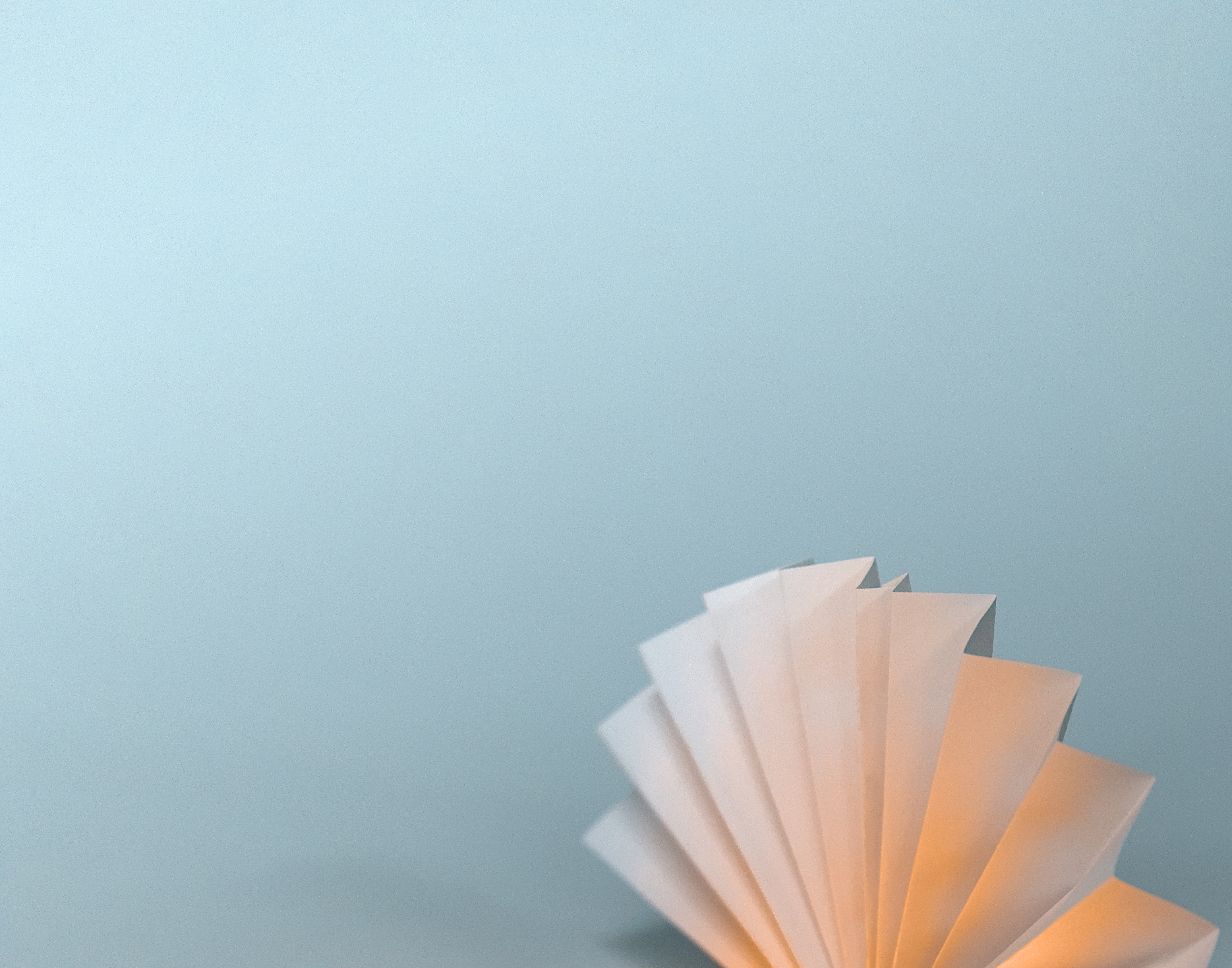
A shell like appearance. This reminded me of the Clamshell depicted with Venus, an ancient symbol of love. The pastels and light to shadow transitions seemed elegant and feminine to me. I imagine this image as a desktop background on a computer screen. The use of empty space and the form kept in the lower right third, remind me of the tranquility of emptiness with the peace of being alone, gently graced by the peachiness of love growing in the lower right, yet to show it's flower.
DRAGON. Steven C. Morreale (2025)
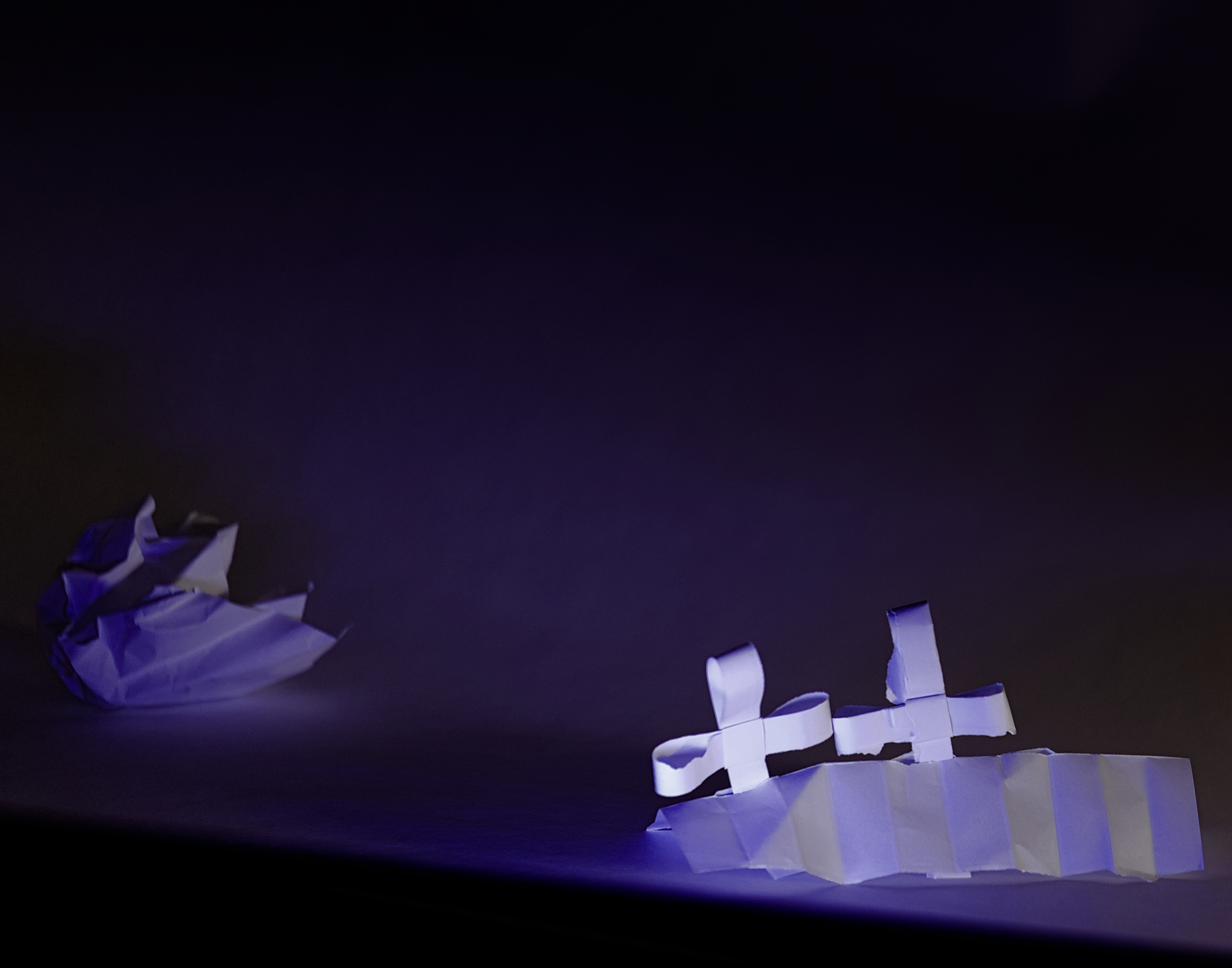
Blue hues, remind me of an ocean scene, is that a dragon at sea and on lookers or fishermen to the right?
FALLEN. Steven C. Morreale (2025)
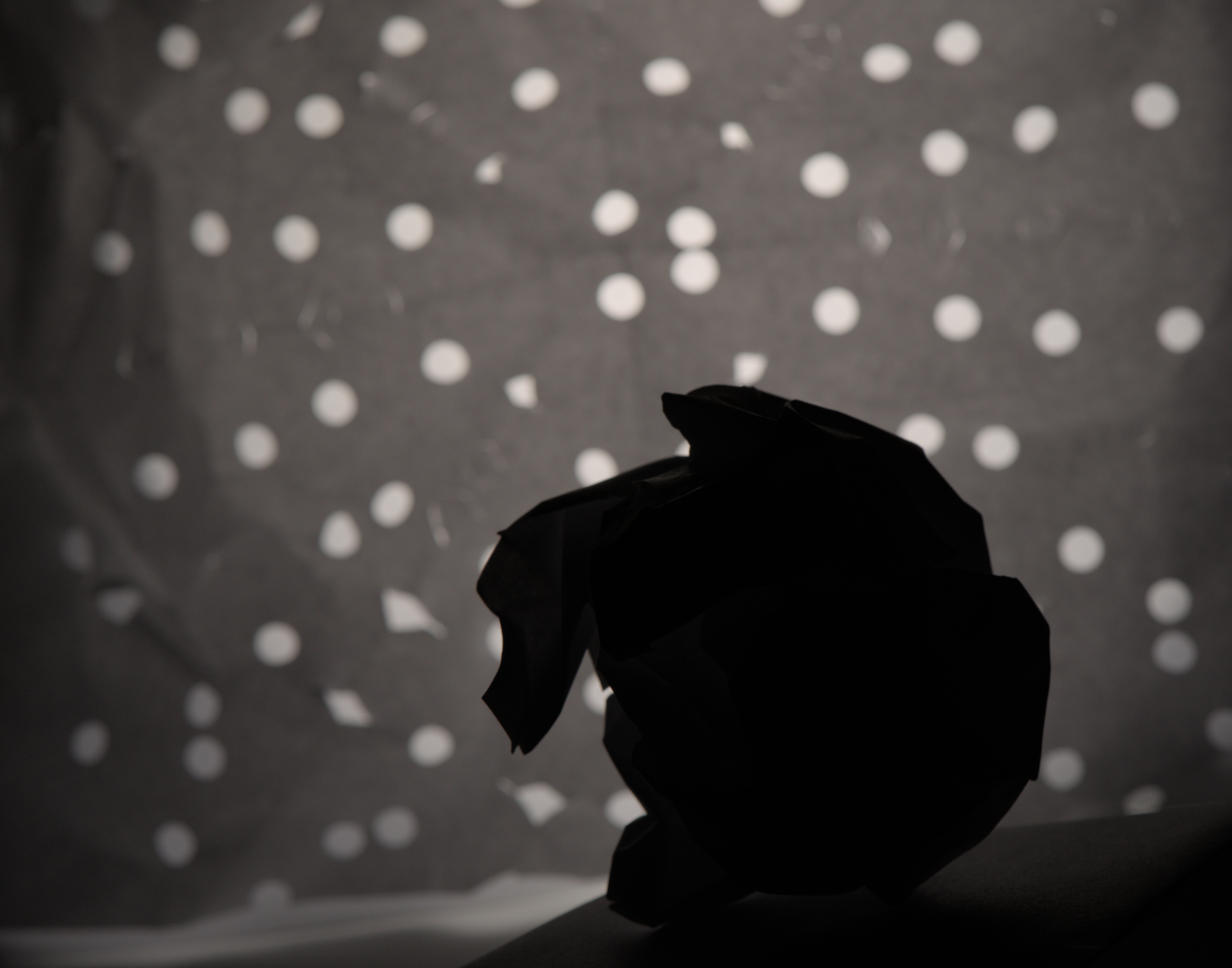
A different processing of the earlier REBUKED image. I wanted to see what this looked like with less extreme tonalities and later how it looked cropped differently. The more muted background and less bright circles within this image seem to blur, giving an illusion of a greater distance between the background and the form. Also the subtle specular highlights on the foreground form makes my eye search it to discern or project what it could be, a creature. The interesting shape is reminiscent of a long snout, but is there a hint of a tongue or are the imagined lips parted? The superior portion curves and has a specular highlight suggesting a back of the neck or upper back, giving an illusion to a creature with wings and down the right side possibly the hind of strong legs, again suggesting a crouched foreign creature in the darkness, possibly taking refuge or sitting in wait. It appears perched on a surface like a gargoyle
CROP EXPERIMENT: REBUKED (CROPPED). Steven C. Morreale (2025)
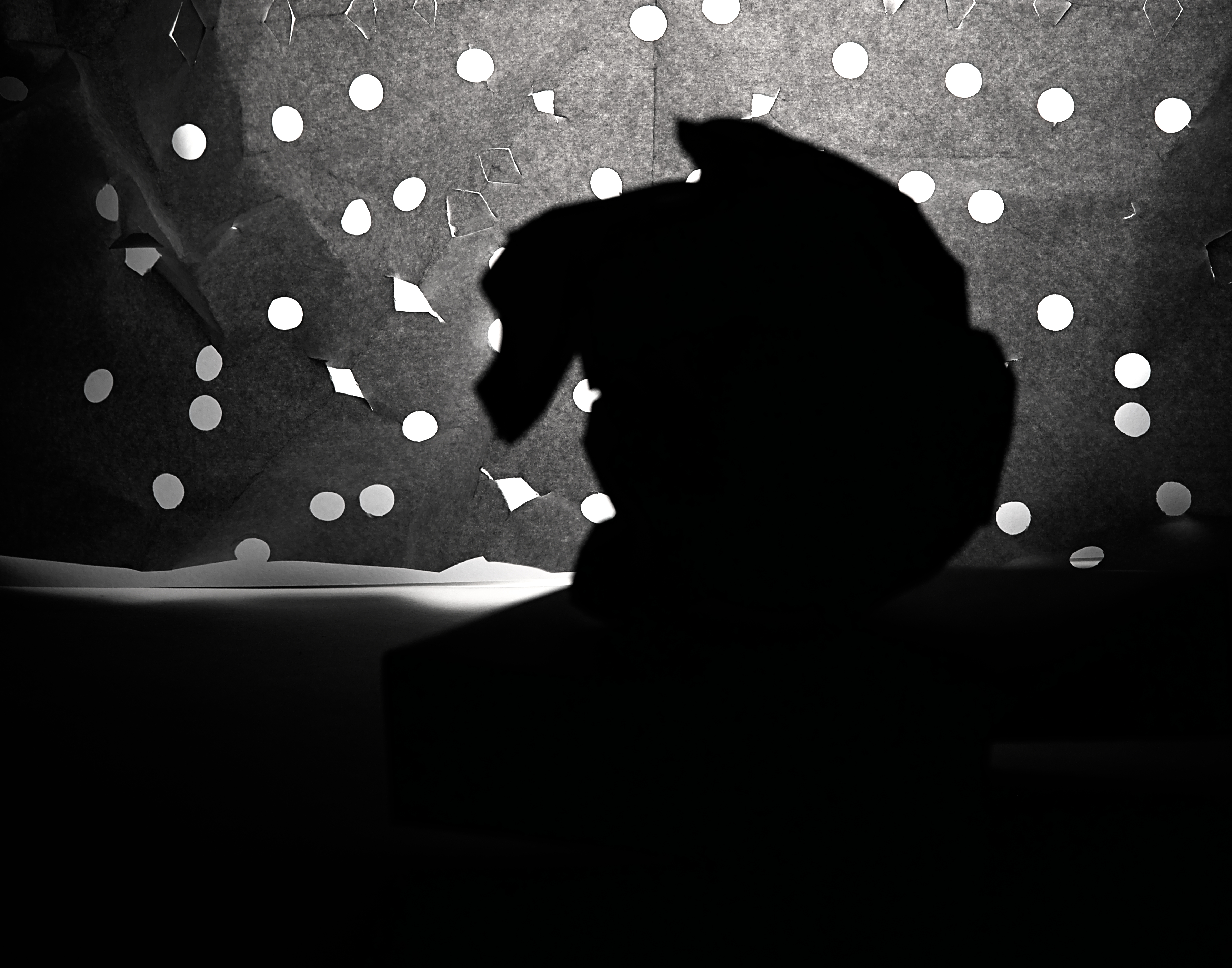
Sometimes a different crop gives a different dimension. This cropped version of the REBUKED image is less appealing to me. The lower third is all in darkness, the eye is drawn to the brightest part of the image in the central upper aspect of the lower third just below the background. The outline of the dark image is blurred against the brighter points in the background. I notice the irregular slices in the background of this image, some are slits, others are angular, there are irregular circles and holes. I'm amazed at how compelling the earlier crop was compared to this image which shifts the focus of the viewer to a less compelling image and greater cosmic meta-story of the mind. Note the cruciform fold that was in the earlier crop's background is not included in this version either.
FINAL THOUGHTS
In the end, as I edit this page to document my own process and critical view of the images from the workshop, I did upload images to the shared Google Drive. I also shared my link to this page with Professor Kelly. I'm interested to hear other opinions. Perhaps me sharing my thoughts here alters how the images are received and interpreted. Does that ruin or add to the experience of them? This is my personal journal of the journey and exercise. We were to upload 5 images, I uploaded 7, because I included the TREES FOR THE WOODS image which wasn't really the assignment but showed the class as a reflection of the art form of Photography in a setting and moment in time. I also wanted to share the perspectives of other participants creations from another photographer's point of view. Truly every scrap of paper can be turned into an artistic or symbolic expression that can convey meaning or mystery. If I succeeded in any of mine without any explanation then participation in the workshop was a success. Which is a compliment to the instructor for giving us this opportunity and challenge to face artistically and creatively. It was a master class for me from my perspective and experience.
Keep capturing moments and have fun! ÐɌ ŠŦɆɅɆ